
Dhanwanthari Ayurveda

Blog

Woman holding her neck while using a laptop, illustrating posture-related discomfort.
Blog

Is Your Posture Affecting Your Spine? Everyday Habits Behind Back and Neck Discomfort

Does your neck feel stiff after scrolling on your phone? Do your shoulders feel tense after work? Perhaps your back starts aching before the day is over. Your daily routine may be contributing to that discomfort. Long periods in one position, an uncomfortable chair, and repeatedly leaning towards a screen can place extra demands on your muscles. Posture care starts with noticing these habits and making practical adjustments. It also means recognising when persistent symptoms need a professional assessment. At Dhanwanthari Ayurvedic Medical Center in Bur Dubai, our Ayurvedic doctors assess your symptoms, lifestyle, and individual condition before recommending a personalised care plan. Dr. Jaisam Explains Why Posture Deserves Attention Long hours of sitting, frequent phone use, and uncomfortable workstation habits can contribute to neck stiffness, shoulder tension, and back discomfort. In this video, Dr. Jaisam from Dhanwanthari Ayurvedic Medical Center, Bur Dubai, discusses posture care and everyday habits worth reviewing.   View this post on Instagram   A post shared by Dhanwanthari (@dhanwanthariuae) Watch Dr. Jaisam’s posture-care video, then review the practical tips below for your daily routine. If discomfort persists or keeps returning, an individual assessment can help guide the next steps. At Dhanwanthari, our Ayurvedic doctors assess your symptoms, lifestyle, and individual condition before recommending a personalised care plan. Can Posture Contribute to Back and Neck Discomfort? An unsupported or awkward working position can increase strain on muscles and joints. Spending too long in the same position can also become uncomfortable—even when your workstation is well arranged. The aim is to find supported, comfortable positions and change them throughout the day. You do not need to hold yourself rigidly upright for hours. The OSHA guidance on computer workstation positions recommends supported working positions and regular changes in posture. However, posture alone does not explain every episode of pain. Back discomfort can have several causes, and the cause is not always clear. An assessment is particularly important when symptoms persist or affect daily activities. Everyday Habits Worth Reviewing Think about when your discomfort appears. Does it build during computer work, after driving, or while using your phone? These observations can help you identify habits to discuss during your consultation. Daily habit A practical adjustment Leaning forward to read your screen Adjust the screen so you can read comfortably without leaning Sitting without back support Adjust your chair to support your lower back Keeping your feet unsupported Use the floor or a suitable footrest Reaching repeatedly for the mouse Bring frequently used equipment closer Staying in one position for long periods Change position and take brief movement breaks Looking down at your phone for extended periods Raise it to a comfortable viewing position and take breaks Workstation adjustments should help you feel comfortable rather than force your body into a fixed position. Small Changes You Can Start Today 1. Review Your Workspace Check whether your chair, screen, keyboard, and mouse allow you to work without repeatedly leaning or reaching. Keep your shoulders relaxed and your back supported. For extended laptop work, consider whether separate accessories would make the setup more comfortable. 2. Build Movement Into Your Routine Use natural pauses—finishing a task or taking a call—as reminders to change position. Stand or walk briefly when practical. Regular position changes matter alongside the way you sit. 3. Stay Active Within Your Comfort Level For uncomplicated back pain, continuing suitable daily activities is generally encouraged. Avoid prolonged bed rest, and stop exercises that make your pain worse. The NHS guidance on back pain provides further information on activity and when to seek help. 4. Notice Recurring Symptoms Keep a brief record of where you feel discomfort, when it starts, and whether it travels into an arm or leg. Bring this information to your appointment. Avoid assuming that recurring pain is simply a normal part of desk work. Personalised Ayurvedic Assessment at Dhanwanthari At Dhanwanthari Ayurvedic Medical Center, a consultation considers more than the area that hurts. Your doctor assesses your symptoms alongside your working habits, daily routine, and individual condition. Tell your doctor about previous injuries, existing diagnoses, medicines, and any tests or treatments you have already received. These details help guide appropriate recommendations and identify whether further medical assessment is needed. If Ayurvedic care is recommended, ask about its purpose, suitability, expected benefits, and limitations. Any proposed herbal medicines should also be checked for possible interactions with your current medicines. For information about the therapies discussed on our website, read our guide to Ayurvedic back pain treatment in Dubai. When Should You Seek Medical Help? Arrange an assessment if pain keeps returning, limits your activities, or does not improve after a few weeks. Seek urgent medical advice for sudden severe pain, rapidly worsening symptoms, or back pain accompanied by fever or feeling unwell. Go to an emergency department immediately if back pain occurs with new bladder or bowel problems, loss of sensation around the genitals or anus, symptoms in both legs, chest pain, or following a serious accident. These symptoms should not wait for a routine clinic appointment. FAQs Can sitting for long periods contribute to back discomfort? Remaining in one position for extended periods can become uncomfortable. Review your workstation, change positions regularly, and seek advice if symptoms persist. Does back pain mean my posture has damaged my spine? Back pain alone does not establish spinal damage or identify its cause. Persistent, worsening, or unusual symptoms need assessment. Can Ayurvedic care replace posture changes? Your doctor may include lifestyle guidance in your care plan. Discuss your workstation and activity habits alongside any proposed treatment. Should I get neck stiffness checked? Arrange an assessment if stiffness persists, worsens, or affects daily activities. Report associated symptoms such as arm pain, tingling, numbness, or weakness. Book a Consultation in Bur Dubai If back discomfort, neck stiffness, or shoulder tension keeps interrupting your day, speak with an Ayurvedic doctor in Dubai at Dhanwanthari. Our doctors assess your symptoms and lifestyle before recommending a personalised care plan. 📍 Dhanwanthari Ayurvedic Medical Center, Bur
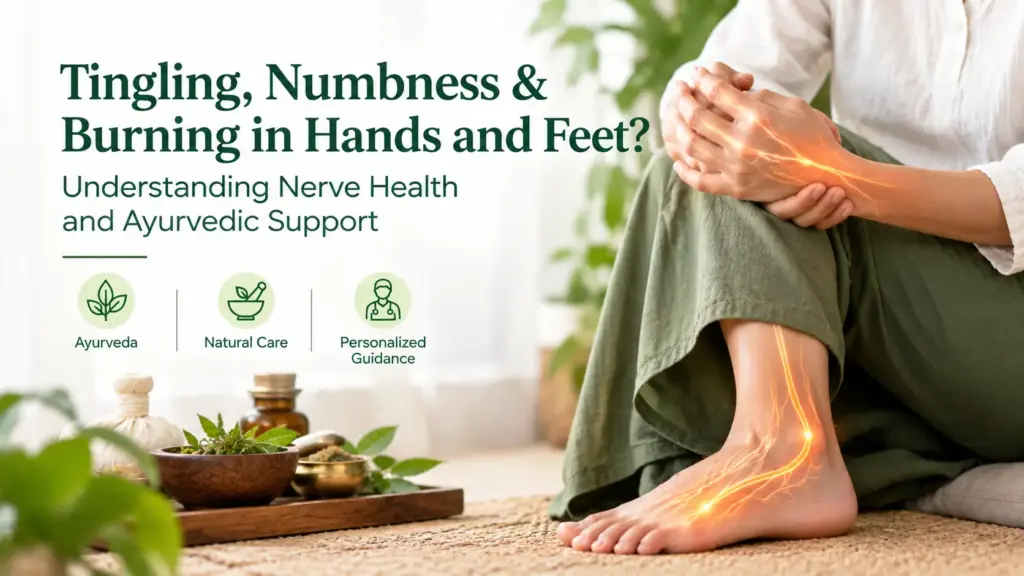

Tingling numbness and burning in hands and feet at an Ayurvedic clinic in Dubai
Blog, Healthy Lifestyle

Tingling, Numbness or Burning in Your Hands and Feet? Understanding Nerve Health and Ayurvedic Support

Tingling in your fingers. Burning in your feet. Numbness that seems to appear without warning. Or weakness that makes everyday movements more difficult. These symptoms can be easy to ignore, especially when they begin gradually. But changes in sensation or strength in the hands and feet can sometimes be linked to nerve-related conditions and deserve proper attention. In this article, we look at common reasons for these symptoms, what nerve health means, when professional assessment is important, and how Ayurveda may provide personalized supportive care. 🎥 Watch the Dhanwanthari Ayurveda Video: Understanding Nerve Health In this video, Dhanwanthari Ayurveda introduces Srothotharangini, an Ayurvedic approach presented as supporting nerve health, circulation and overall wellbeing through personalized care. View this post on Instagram A post shared by Dhanwanthari (@dhanwanthariuae) Experiencing tingling, numbness, burning sensations or weakness in your hands or feet? The video highlights an important message: recurring or persistent changes in sensation should not simply be dismissed as tiredness or temporary discomfort. What Can Tingling, Numbness or Burning Mean? Tingling, numbness, burning sensations and weakness can occur when nerves are not functioning normally. Peripheral nerves carry signals between the brain and spinal cord and the rest of the body. They help the body sense touch, temperature and pain and also control movement and certain automatic functions. Peripheral neuropathy is one condition that can cause these symptoms. According to the Mayo Clinic, common symptoms can include numbness, prickling, tingling, burning or stabbing pain and muscle weakness, particularly in the hands and feet. However, these symptoms alone do not establish a diagnosis. The underlying cause needs to be assessed by an appropriate healthcare professional. Common Symptoms of Nerve Problems Nerve-related symptoms can vary depending on which nerves are affected. You may notice: Tingling or pins-and-needles sensations Numbness in the hands or feet Burning or stabbing pain Increased sensitivity to touch Muscle weakness Difficulty with balance or coordination Reduced sensation of temperature or pain A feeling of wearing gloves or socks when you are not Some people experience symptoms gradually, while others may notice them more suddenly. The National Institute of Neurological Disorders and Stroke notes that peripheral neuropathy can affect sensory, motor or autonomic nerves, so symptoms can differ considerably from one person to another. What Causes Nerve Symptoms? There is no single cause of tingling or numbness. Possible causes include: Diabetes Diabetes is one of the most common causes of peripheral neuropathy. Persistently high blood glucose can damage nerves and the small blood vessels that supply them. Vitamin Deficiencies Certain vitamin deficiencies, particularly vitamin B12 deficiency, can contribute to nerve problems. Nerve Compression or Injury An injury or prolonged pressure on a nerve can result in numbness, tingling or weakness. Certain Medications Some medications, including certain chemotherapy drugs, can affect peripheral nerves. Autoimmune or Metabolic Conditions Autoimmune disorders, kidney or liver disease, thyroid disorders and other metabolic conditions can sometimes be associated with neuropathy. Infections and Other Conditions Certain infections, inherited conditions and exposure to toxins can also affect the peripheral nervous system. Because the causes are varied, it is important not to assume that every case of burning feet or numb hands is neuropathy. Is Tingling in Your Feet Always Neuropathy? Not necessarily. Temporary tingling can occur when you sit or sleep in a position that places pressure on a nerve. It may disappear once the pressure is relieved. Persistent, recurring or progressively worsening symptoms are different. If tingling, numbness, burning or weakness continues, affects both sides of the body, interferes with sleep or daily activities, or becomes progressively worse, professional assessment is advisable. The Mayo Clinic recommends seeking medical care for unusual tingling, weakness or pain in the hands or feet because early assessment can help identify the cause and reduce the risk of further nerve damage. Why Diabetes and Nerve Health Are Closely Connected For people with diabetes, nerve health deserves particular attention. Diabetic peripheral neuropathy often begins in the feet and can cause: Burning sensations Tingling Numbness Increased sensitivity Weakness Reduced ability to feel pain or temperature The CDC advises people with diabetes to discuss burning, tingling, weakness or pain in the hands or feet with their doctor, particularly when symptoms affect sleep or daily activities. Reduced sensation can also make it easier to overlook cuts, blisters or foot injuries. Regular foot care and appropriate medical follow-up are therefore important for people with diabetes. How Ayurveda Looks at Nerve Health Ayurveda traditionally considers nerve-related complaints within a broader assessment of the body rather than focusing only on one symptom. An Ayurvedic practitioner may consider: Individual constitution or Prakriti Dosha balance Lifestyle and daily routine Diet and digestion Sleep Stress Physical activity The nature and duration of symptoms Existing health conditions Previous treatments Traditional Ayurvedic understanding often considers Vata to have an important relationship with movement and neurological functions. However, an Ayurvedic interpretation should not be used as a substitute for identifying the medical cause of neurological symptoms. The first priority is understanding what may be contributing to the symptoms. What Is Srothotharangini? Srothotharangini is the Ayurvedic approach highlighted in Dhanwanthari Ayurveda’s video. The concept is presented around supporting nerve health, circulation and overall wellbeing through personalized Ayurvedic care. Rather than suggesting one therapy for everyone, the Ayurvedic approach can consider the person’s symptoms, constitution, lifestyle and overall health before developing an appropriate plan. This is particularly important when symptoms such as numbness or weakness may have different underlying causes. How Personalised Ayurvedic Care May Support Nerve Health Ayurvedic care may involve a combination of traditional therapies, lifestyle guidance, dietary recommendations and practitioner-selected Ayurvedic medicines. Depending on the individual’s assessment, therapies may be considered to support: Relaxation and comfort Muscle and tissue nourishment Mobility General wellbeing Circulatory support A balanced daily routine At Dhanwanthari Ayurveda, traditional therapies such as Mamsa Kizhi and Njavara Kizhi are described as being customized according to the individual’s health condition and Ayurvedic assessment. Mamsa Kizhi is listed by the clinic for selected nerve-related and muscular conditions, while Njavara Kizhi is described as a

Eczema in Dubai
Blog, Healthy Lifestyle

Eczema in Dubai: How Heat, Air Conditioning & Daily Habits Affect Your Skin

Living with eczema in Dubai can be challenging when outdoor heat, sweating and indoor air conditioning become part of everyday life. Eczema-prone skin can be particularly sensitive to environmental changes, skincare products, fabrics and other everyday triggers. Atopic dermatitis, commonly known as eczema, can cause dry, itchy and inflamed skin. Different people can have different triggers, and weather, heat, sweat, fragrances, harsh detergents and other irritants may contribute to flare-ups. For people living in the UAE, understanding how heat, air conditioning, daily routines and skincare habits interact with sensitive skin can be an important part of maintaining skin comfort. From an Ayurvedic perspective, skin health is considered part of overall wellbeing. Factors such as individual constitution, diet, digestion, lifestyle, stress and environment may all be considered when developing a personalised approach. What Is Eczema? Eczema refers to a group of conditions that can make the skin dry, itchy, irritated or inflamed. Atopic dermatitis is one of the most common forms. Common symptoms may include: Symptom What it may feel or look like Itching Mild to intense urge to scratch Dryness Rough, tight or flaky skin Redness Inflamed or irritated areas Scaling Dry or scaly patches Cracking Small cracks caused by excessive dryness Thickened skin May develop after repeated scratching Sensitivity Skin may react easily to products or environmental factors Eczema can affect different areas of the body and may vary considerably from person to person. Because several skin conditions can appear similar, professional evaluation is important when the diagnosis is uncertain, or symptoms persist. Why Can Dubai’s Climate Be Challenging for Eczema-Prone Skin? Dubai’s environment can expose the skin to significant temperature changes during a typical day. You may move from: Hot outdoor conditions → air-conditioned car → air-conditioned office → outdoor heat → strongly air-conditioned home. For sensitive skin, these changes can sometimes be uncomfortable. Heat and sweating are recognized potential eczema triggers, while dry indoor air and sudden temperature changes can also contribute to irritation for some people. However, eczema triggers are individual. What affects one person may not affect another. Common environmental factors to watch Heat and overheating Excessive sweating Very dry indoor air Sudden temperature changes Dust and environmental irritants Fragranced products Harsh soaps and detergents Rough or tight clothing Instead of assuming that every environmental factor is responsible for a flare-up, keeping track of your own symptoms can help identify patterns. Eczema and Air Conditioning: Can AC Affect Your Skin? Air conditioning itself does not mean that eczema will worsen. However, spending long periods in a very dry indoor environment may contribute to skin dryness in some people. This can be particularly noticeable when someone spends much of the day indoors in air-conditioned environments and then moves between indoor and outdoor temperatures. The American Academy of Dermatology recommends keeping skin moisturized and avoiding extremely dry environments when managing eczema. If air conditioning seems to make your skin uncomfortable: Keep your skin moisturized regularly. Avoid setting indoor temperatures unnecessarily low. Pay attention to whether dryness increases after long periods indoors. Drink adequate fluids as part of general wellbeing. Use gentle, fragrance-free skincare products. Observe whether symptoms change between indoor and outdoor environments. The goal is not to avoid air conditioning but to maintain a comfortable environment and consistent skin-care routine. How Does Heat and Sweat Affect Eczema? Heat and sweating can be particularly relevant for people with eczema-prone skin. When you sweat, the moisture and salt left on the skin can sometimes contribute to itching or irritation. Overheating can also encourage scratching, which may further irritate sensitive skin. The AAD specifically identifies overheating and sweating as potential triggers for eczema and recommends keeping the body at a comfortable temperature. Simple ways to manage heat Situation Practical approach Outdoor heat Take breaks in cooler areas Exercise Cool down and rinse sweat from the skin Heavy sweating Change into dry clothing Tight clothing Choose loose, breathable fabrics Hot showers Use warm or lukewarm water Prolonged outdoor activity Avoid the hottest periods where practical These measures do not replace medical treatment, but they can support a consistent skin-care routine. 7 Everyday Habits That May Irritate Eczema-Prone Skin Sometimes the products and routines we use every day can become part of the problem. 1. Very hot showers Hot water can increase dryness and discomfort. Dermatologists generally recommend warm or lukewarm water rather than very hot water for eczema-prone skin. 2. Long showers Long exposure to water can contribute to dryness. The AAD recommends keeping baths and showers relatively short and moisturizing afterward. 3. Fragranced skincare Perfumes and fragrances can trigger eczema in some people. Fragrance-free products are generally preferred for sensitive eczema-prone skin. 4. Harsh detergents Laundry detergents and fabric products can irritate sensitive skin. Choosing fragrance-free and dye-free laundry products may be helpful for some people. 5. Scratching Scratching can further damage already irritated skin and make the itch-scratch cycle harder to control. 6. Tight or rough clothing Tight clothing and rough fabrics can rub against sensitive areas. Loose, comfortable clothing may reduce unnecessary irritation. 7. Constantly changing skincare products Trying many products at once makes it difficult to identify what is helping or irritating your skin. Introduce new products carefully and observe how your skin responds. Building a Simple Eczema-Friendly Skincare Routine A consistent routine can be more useful than repeatedly changing products. Morning Step 1: Use a gentle cleanser when needed.>Step 2: Pat the skin dry rather than rubbing aggressively.>Step 3: Apply a suitable moisturiser.>Step 4: Use appropriate sun protection when outdoors. During the day If your skin becomes dry, moisturise as needed. If you sweat heavily, gently rinse the skin and change out of damp clothing when practical. Evening Use a gentle cleansing routine, avoid very hot water, and moisturise while the skin is still slightly damp. Dermatologists recommend moisturising regularly and choosing fragrance-free creams or ointments for atopic dermatitis. Can Diet and Digestion Be Considered in Ayurvedic Skin Care? Ayurveda traditionally considers skin health within the broader context of an individual’s overall wellbeing. An

Kriya Kalpa in Ayurveda and Ayurvedic treatment in Dubai
Blog

What Is Kriya Kalpa in Ayurveda? Understanding Traditional Ayurvedic Eye Therapies

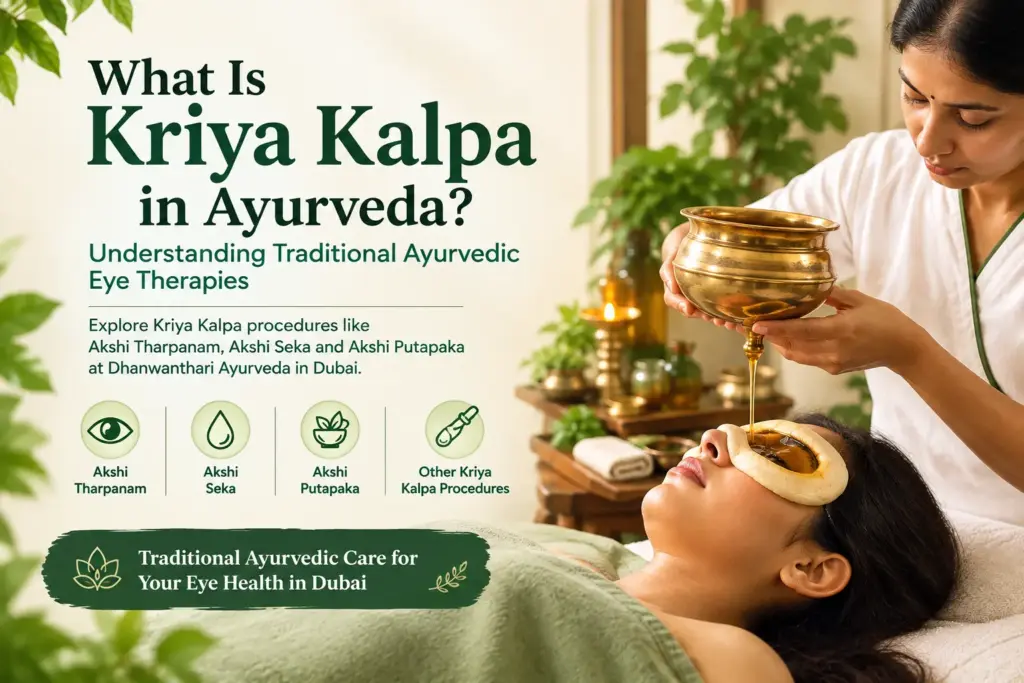
What Is Kriya Kalpa in Ayurveda? Kriya Kalpa refers to a group of specialized Ayurvedic procedures traditionally associated with Netra Chikitsa (Ayurvedic eye care) within Shalakya Tantra. Classical Ayurvedic sources describe procedures such as Tarpana, Putapaka, Seka, Ashchyotana, and Anjana under Kriya Kalpa. The All India Institute of Ayurveda (AIIA) also identifies these procedures within its Shalakya Tantra department. For people researching Ayurvedic treatment in Dubai, understanding Kriya Kalpa can provide useful context about how traditional Ayurveda approaches certain aspects of eye care. Kriya Kalpa is a traditional Ayurvedic approach to eye care that includes procedures such as Tarpana, Seka, Putapaka, Ashchyotana, and Anjana. Practitioners select these procedures according to an individual’s assessment and treatment requirements. Kriya Kalpa should not replace appropriate ophthalmological diagnosis or treatment when a medical eye condition requires conventional care. (AIIA) What Does Kriya Kalpa Mean? The term Kriya Kalpa comes from Sanskrit terminology used in Ayurveda. AIIA explains Kriya as a medical treatment procedure and Kalpa as a practical, feasible, suitable, or competent method of treatment. In Ayurvedic practice, Kriya Kalpa traditionally refers to localized therapeutic procedures associated with eye care. Rather than treating Kriya Kalpa as one single treatment, it is more accurate to understand it as a group of traditional procedures. What Are the Main Kriya Kalpa Procedures? Different Ayurvedic texts describe Kriya Kalpa in slightly different ways. AIIA identifies five procedures described by Acharya Sushruta: Kriya Kalpa Procedure Traditional Description Area of Focus Tarpana A traditional procedure involving the controlled retention of a prescribed preparation around the eyes Eye care Putapaka A classical procedure involving a specially prepared Ayurvedic formulation Eye care Seka Controlled application of a prescribed liquid preparation Eye care Ashchyotana Traditional instillation of a prescribed preparation into the eye according to Ayurvedic practice Eye care Anjana Application of a specific Ayurvedic preparation according to traditional protocol Eye care Some Ayurvedic authorities also describe Pindi and Vidalaka among Kriya Kalpa procedures. The choice of procedure depends on the practitioner’s assessment rather than a one-size-fits-all approach. Why Does Kriya Kalpa Have a Place in Shalakya Tantra? Shalakya Tantra is the Ayurvedic specialty associated with conditions involving the eyes, ears, nose, throat, head and oral region. Within this specialty, Ayurveda developed specific local procedures for different sensory and head-and-neck concerns. Kriya Kalpa represents the group of procedures traditionally associated with the eyes. AIIA’s Shalakya Tantra documentation identifies Kriya Kalpa as a dedicated area of clinical practice and records procedures including Tarpana, Putapaka and Ashchyotana. You can learn more about Shalakya Tantra in Dubai through our related guide on this specialized branch of Ayurveda. What Is Akshi Tharpanam? Akshi Tharpanam, commonly called Tarpana, is a traditional Ayurvedic eye procedure within Kriya Kalpa. During the procedure, the practitioner traditionally creates a suitable boundary around the eyes and retains a prescribed preparation for a specified period under professional supervision. The preparation, duration and suitability can vary according to the individual’s assessment. Dhanwanthari Ayurveda currently lists Akshi Tharpanam among its Ayurvedic treatment offerings in Dubai. If you are researching Akshi Tharpanam treatment in Dubai, a professional consultation should come before the procedure so the practitioner can assess whether it is appropriate for your situation. What Is Akshi Seka? Akshi Seka, also known as Netra Seka, is another traditional Kriya Kalpa procedure. It involves the controlled application of a prescribed liquid preparation around or over the closed eye according to the practitioner’s protocol. The type of preparation, application method and duration depend on the individual’s assessment. Dhanwanthari Ayurveda lists Akshi Seka among its current Ayurvedic treatment offerings. People interested in Akshi Seka treatment in Dubai should consult a qualified Ayurvedic practitioner rather than attempting the procedure independently. What Is Akshi Putapaka? Akshi Putapaka represents another classical Kriya Kalpa procedure described in Ayurvedic literature. AIIA identifies Putapaka as one of the five Kriya Kalpa procedures described by Acharya Sushruta. The procedure involves a specially prepared Ayurvedic formulation and requires appropriate practitioner knowledge and preparation. Because the procedure relates to the eye area, people should not attempt Putapaka or other specialized eye procedures without professional guidance. Dhanwanthari Ayurveda also lists Akshi Putapaka Treatments among its treatment offerings. What Are Ashchyotana and Anjana? AIIA identifies Ashchyotana and Anjana alongside Tarpana, Seka and Putapaka as classical Kriya Kalpa procedures. Procedure Traditional Role Ashchyotana Traditional application of a prescribed preparation to the eye Anjana Traditional application of a specific Ayurvedic preparation according to established practice These procedures require appropriate preparation, assessment and technique. Their traditional use does not mean that everyone with an eye complaint should receive them. Kriya Kalpa Procedures at a Glance For readers who want a quick overview: Procedure Part of Kriya Kalpa? Traditional Ayurvedic Context Tarpana Yes Specialized eye-care procedure Seka Yes Controlled application of a liquid preparation Putapaka Yes Classical eye-care procedure Ashchyotana Yes Traditional eye application Anjana Yes Traditional eye preparation Pindi Described by some authorities Local eye-care procedure Vidalaka Described by some authorities Local application around the eye AIIA notes that different Ayurvedic authorities describe the Kriya Kalpa group somewhat differently, which is why references may vary between sources. What Happens Before a Kriya Kalpa Procedure? A responsible Ayurvedic consultation should begin with an assessment rather than immediately selecting a procedure. The practitioner may discuss: Assessment Area Why It Matters Current symptoms Helps understand the individual’s concern Medical history Identifies relevant health conditions Existing eye diagnosis Helps determine whether conventional eye care is necessary Current medications Helps identify potential safety considerations Lifestyle Provides context about daily habits and environmental factors Diet and routine Forms part of an individualized Ayurvedic assessment Previous treatment Helps the practitioner understand what care the person has already received Suitability for therapy Helps determine whether a particular Ayurvedic procedure is appropriate This individualized approach is important because not every Kriya Kalpa procedure suits every person. NCCIH similarly recommends discussing complementary approaches with healthcare providers and choosing practitioners based on appropriate training and experience. Who May Consider Kriya Kalpa? People interested in traditional Ayurvedic approaches to eye wellness may discuss Kriya

What is Shalakya Tantra and Ayurvedic treatment in Dubai
Blog

What Is Shalakya Tantra? Understanding This Specialised Branch of Ayurveda

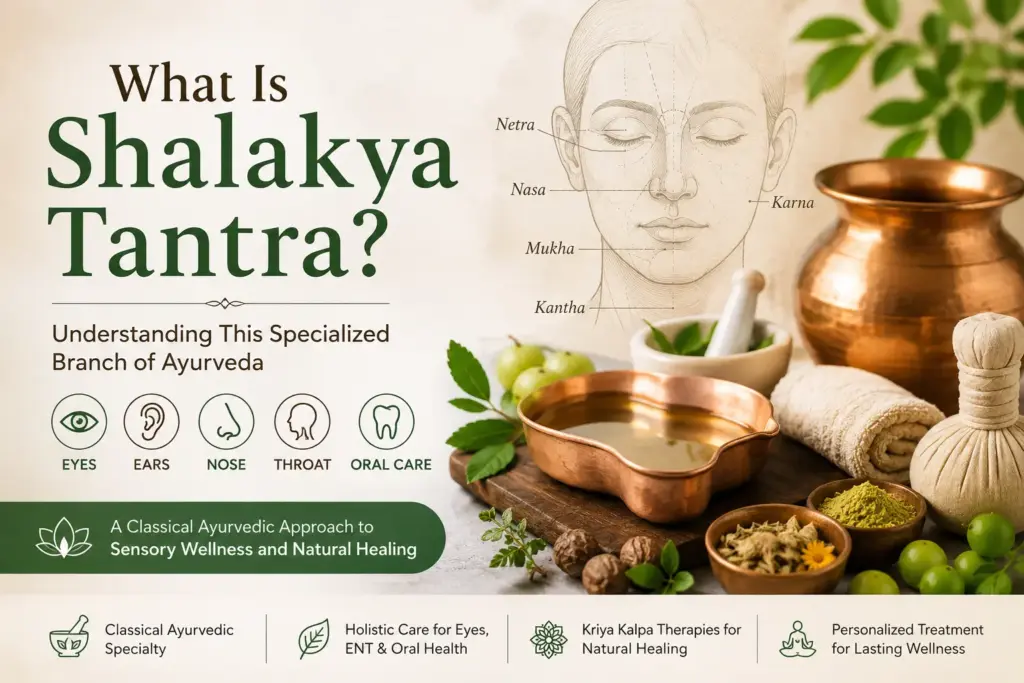
Shalakya Tantra is one of the eight classical branches of Ayurveda and traditionally focuses on the diagnosis, management, and treatment of conditions affecting areas above the neck, including the eyes, ears, nose, throat, head, and oral region. For people exploring Ayurvedic approaches to eye health, understanding Shalakya Tantra provides useful insight into how Ayurveda traditionally views the eyes and other sensory organs. In today’s lifestyle, where prolonged screen exposure, environmental factors and demanding work routines can affect everyday comfort, traditional Ayurvedic knowledge continues to attract interest as part of a broader approach to wellness. At Dhanwanthari Ayurveda in Dubai, Ayurvedic care is based on traditional principles and personalised assessment. The centre provides a range of Ayurvedic treatments and consultations under the guidance of experienced Ayurvedic practitioners. What Does Shalakya Tantra Mean? The term Shalakya Tantra refers to a specialized branch of Ayurveda traditionally concerned with diseases and disorders involving the head and sensory organs. Government Ayurveda sources describe Shalakya Tantra as the branch concerned with the eyes, ears, nose, throat and head, while Ayurveda education and clinical departments also include oral and dental conditions within this specialty. The branch includes both preventive and therapeutic perspectives, with attention given to maintaining the health and function of important sensory organs. In simple terms, Shalakya Tantra can be understood as the Ayurvedic specialty that focuses primarily on conditions affecting the eyes, ears, nose, throat, mouth and related structures of the head and neck. Shalakya Tantra as One of the Eight Branches of Ayurveda Ayurveda is traditionally described as having eight major branches, collectively known as Ashtanga Ayurveda. These include: Kayachikitsa – Internal medicine Shalya Tantra – Surgery Shalakya Tantra – Eye, ENT and related head and neck care Kaumarabhritya – Paediatrics Bhuta Vidya – Traditional approaches concerning mental and psychological disorders Agada Tantra – Toxicology Rasayana – Rejuvenation and healthy ageing Vajikarana – Reproductive health and vitality The Ministry of AYUSH has described Shalakya as encompassing eye, ENT and dentistry-related specialties within the broader Ayurvedic system. This classification demonstrates that eye care was not treated as an isolated subject within traditional Ayurveda. Instead, it formed part of a dedicated specialty concerned with important sensory organs and structures of the head. What Areas Does Shalakya Tantra Cover? Shalakya Tantra has a broad scope. Eye Care The eye is an important area within Shalakya Tantra. Ayurvedic ophthalmology traditionally addresses eye-related conditions and approaches eye wellness through assessment, lifestyle, diet and specialized therapies. Modern Ayurveda education also has dedicated Shalakya Tantra training in ophthalmology, including the study of eye examination and various ophthalmic conditions. If you are interested specifically in this area, you can learn more about Ayurvedic Ophthalmology in Dubai and how Dhanwanthari approaches traditional eye care. Ear Care Shalakya Tantra also encompasses traditional Ayurvedic approaches related to the ears and hearing. Nose and Sinus Care The branch includes the nose and related structures, including traditional approaches to certain nasal and sinus-related concerns. Throat and Head Conditions involving the throat and other structures of the head are also traditionally included within Shalakya Tantra. Oral and Dental Care Traditional Shalakya Tantra also extends to the mouth and teeth. The All India Institute of Ayurveda identifies ophthalmic, ENT and oro-dental care within its Shalakya Tantra department. Why Are the Eyes Important in Shalakya Tantra? The eyes have an important place in Ayurveda because vision is one of the primary ways people interact with their surroundings. The traditional Ayurvedic perspective recognizes the importance of protecting sensory functions and maintaining the health of the structures involved in vision. This is why Netra Roga, or disorders relating to the eyes, is a dedicated area within Shalakya Tantra education and practice. Government Ayurveda documentation lists Netra Roga under the Shalakya specialty, corresponding broadly to ophthalmology. How Does Shalakya Tantra Approach Eye Health? The Ayurvedic approach to eye health is traditionally individualized. Instead of assuming that the same approach is appropriate for everyone, an Ayurvedic practitioner may consider: Individual constitution or Prakriti Lifestyle Diet Sleep patterns Daily routine Environmental exposure Existing health conditions Individual symptoms Overall wellbeing This approach forms part of the broader Ayurvedic principle of considering the individual rather than focusing only on a single symptom. At Dhanwanthari Ayurveda, consultations are designed around understanding the individual’s health concerns and developing a personalized Ayurvedic approach. What Are Kriya Kalpa Therapies? One of the important concepts associated with Ayurvedic ophthalmology within Shalakya Tantra is Kriya Kalpa. Kriya Kalpa refers to a group of specialized Ayurvedic procedures traditionally used in eye care. The All India Institute of Ayurveda identifies Kriya Kalpa as an important specialized treatment approach within Shalakya Tantra and describes its use in the management of ophthalmic conditions. Depending on the individual’s assessment and treatment requirements, traditional eye procedures may include therapies such as: Tarpana Seka Putapaka Other practitioner-guided ophthalmic procedures These therapies should be performed only under the guidance of an appropriately qualified practitioner. What Is Akshi Tharpanam? Akshi Tharpanam, commonly referred to as Tarpana, is a traditional Ayurvedic eye-care procedure associated with Kriya Kalpa. During the procedure, a prescribed preparation is traditionally retained around the closed eyes for a specified period under practitioner supervision. The exact preparation, duration and suitability depend on the individual’s assessment. People interested in this traditional therapy can explore Akshi Tharpanam treatment in Dubai at Dhanwanthari Ayurveda. It is important not to attempt specialised Ayurvedic eye procedures independently, particularly when symptoms have not been professionally assessed. What Is Akshi Seka? Akshi Seka is another traditional Ayurvedic eye-care procedure. It involves the controlled application of a prescribed liquid preparation around or over the closed eyes according to the practitioner’s instructions. The choice of preparation, duration and method may vary according to the individual’s requirements. Dhanwanthari Ayurveda includes Akshi Seka among its Ayurvedic treatment offerings. Those interested can learn more about Akshi Seka treatment in Dubai through a professional consultation. What Is Akshi Putapaka? Akshi Putapaka is another traditional procedure associated with Ayurvedic ophthalmology and Kriya Kalpa. Its use and preparation are determined according to traditional

Ayurvedic physician providing an eye consultation for natural eye wellness at an Ayurvedic Ophthalmology clinic in Dubai.
Blog

Ayurvedic Ophthalmology in Dubai: A Holistic Approach to Supporting Eye Health Naturally

Introduction Our eyes are among the most valuable sensory organs, yet they are often the most overworked. From prolonged screen time and digital devices to environmental pollution and stressful lifestyles, modern living places continuous strain on our vision. Many people experience symptoms such as tired eyes, dryness, burning sensations, blurred vision, or eye fatigue without realizing how daily habits may contribute to these concerns. Ayurveda has long emphasized the importance of preserving eye health through preventive care and personalized wellness. The classical Ayurvedic principle, “Sarvendriyanam Nayanam Pradhanam”—“Among all the sense organs, the eyes are the most important”—reflects the significance of vision in maintaining overall wellbeing. This philosophy is the foundation of Shalakya Tantra, Ayurveda’s specialized branch dedicated to the care of the eyes, ears, nose, throat, and head. At Dhanwanthari Ayurvedic Medical Centre, we combine authentic Ayurvedic principles with a modern understanding of eye health to offer personalized Ayurvedic Ophthalmology services in Dubai. Our goal is to help individuals adopt a holistic approach to eye wellness while complementing routine eye examinations and professional ophthalmic care. Why Are Eye Problems Becoming More Common Today? Modern lifestyles have transformed the way we use our eyes. Long working hours on computers, excessive smartphone use, reduced blinking, poor sleep, air-conditioned environments, and increasing stress all contribute to visual discomfort. Recent reviews in Ayurvedic and integrative medicine also highlight the growing impact of digital eye strain and the relevance of preventive eye care practices in today’s screen-dependent world. Modern Lifestyle vs Healthy Eyes Modern Lifestyle Habits Healthy Eye Care Habits 👨‍💻 Long hours on computers ⏰ Follow the 20-20-20 rule (look 20 feet away for 20 seconds every 20 minutes) 📱 Excessive smartphone use 👁️ Blink frequently to keep eyes lubricated 😴 Inadequate sleep 🛌 Get 7–8 hours of quality sleep ❄️ Continuous air-conditioned environments 💧 Stay hydrated and maintain a comfortable indoor environment 🍔 Poor dietary habits 🥕 Eat a balanced diet rich in leafy greens, carrots, citrus fruits, and omega-3 fatty acids 😣 High stress levels 🧘 Practice relaxation techniques such as yoga or meditation 🌫️ Pollution and dust exposure 🕶️ Wear protective eyewear outdoors when needed Small lifestyle changes today can help support long-term eye comfort and overall visual wellness. Digital Eye Strain Extended use of digital devices may lead to symptoms such as eye fatigue, blurred vision, headaches, burning sensations, and difficulty focusing. These concerns are becoming increasingly common among office workers, students, and professionals. Dry and Irritated Eyes Reduced blinking while looking at screens and exposure to dry indoor environments can contribute to eye discomfort. Maintaining proper eye care habits and seeking timely professional guidance may help support ocular comfort. Lifestyle-Related Eye Fatigue Inadequate rest, poor nutrition, and prolonged visual tasks may affect overall eye comfort and daily productivity. Early attention to these symptoms can encourage healthier visual habits. How to Prevent These Major Problems Prevention has always been one of the core principles of Ayurveda. Rather than waiting for discomfort to become severe, Ayurveda encourages adopting healthy daily routines that support overall eye wellness. Some simple preventive practices include: Follow a balanced daily routine (Dinacharya) Take regular breaks during prolonged screen use Blink frequently while using digital devices Maintain adequate hydration Get sufficient sleep each night Eat a balanced diet rich in fruits and vegetables Manage stress through relaxation techniques Schedule regular eye examinations with qualified professionals These habits, combined with professional guidance, can help maintain long-term visual comfort. Ayurveda also emphasizes individualized recommendations based on a person’s constitution and lifestyle rather than a one-size-fits-all approach. Effective Solutions for Supporting Eye Health Ayurveda approaches eye wellness by understanding the individual as a whole. Rather than focusing only on symptoms, Ayurvedic Ophthalmology evaluates lifestyle, diet, daily habits, and constitutional balance before recommending personalized care. This specialized branch of Ayurveda is known as Shalakya Tantra, one of the eight classical specialties dedicated to disorders affecting the eyes, ears, nose, throat, and head. Classical Ayurvedic literature describes various preventive and supportive practices intended to preserve healthy vision and promote ocular wellbeing. Depending on an individual’s consultation and assessment, an Ayurvedic physician may recommend: Personalized Ayurvedic consultation Lifestyle and dietary guidance Eye wellness practices Traditional Ayurvedic therapies where appropriate Stress management recommendations Follow-up consultations to monitor progress It is important to note that Ayurvedic eye care should be viewed as a complementary approach to maintaining eye health and does not replace routine eye examinations or emergency ophthalmic treatment when required. Proof of Effectiveness Growing research continues to explore the role of Ayurvedic principles in supporting eye wellness, particularly in relation to digital eye strain and preventive eye care. Recent reviews suggest that integrating healthy lifestyle practices with traditional Ayurvedic approaches may contribute to improved visual comfort, although further high-quality clinical research is encouraged. How Does Dhanwanthari Provide the Right Solution? At Dhanwanthari Ayurvedic Medical Centre, our Ayurvedic Ophthalmology service is built upon authentic Ayurvedic knowledge and individualized patient care. Why Choose Dhanwanthari? One of the first comprehensively equipped Ayurvedic Ophthalmology services in the UAE Experienced Ayurvedic physicians Personalized consultations based on Ayurvedic assessment Holistic approach that considers lifestyle, diet, and overall wellbeing Modern understanding integrated with authentic Ayurvedic principles Patient-focused care plans designed around individual needs Our objective is to help patients make informed decisions about their eye health while promoting preventive wellness through Ayurveda. Learn More About Our Ayurvedic Ophthalmology Service “Watch our specialists explain why Ayurveda considers the eyes the most important sensory organ and how Shalakya Tantra supports a holistic approach to eye wellness.”   View this post on Instagram   A post shared by Dhanwanthari (@dhanwanthariuae) Book Your Consultation If you are looking for a holistic approach to maintaining eye health, consult the experienced Ayurvedic physicians at Dhanwanthari Ayurvedic Medical Centre, the Best Ayurvedic Clinic in Dubai. Our team provides personalised guidance to help you understand how Ayurvedic Ophthalmology may support your eye wellness journey. Ready to Prioritise Your Eye Health? Take the next step toward healthier eyes with expert Ayurvedic guidance. 📅 Book an AppointmentSchedule a consultation

drinks for fast summer relief and body cooling in Dubai
Blog, Healthy Lifestyle

7 Ayurvedic Cooling Drinks for Fast Summer Relief

Ayurveda Helps Cool the Body Naturally During Summer Summer heat in Dubai can cause dehydration, acidity, fatigue, body heat, skin irritation, and poor digestion. According to Ayurveda, excess heat increases Pitta dosha, leading to internal imbalance. The solution: Ayurvedic cooling drinks. These natural drinks help: Reduce body heat Improve hydration Support digestion Prevent summer fatigue Calm acidity and burning sensation At Dhanwanthari Ayurveda, a trusted Ayurvedic clinic in Dubai, doctors often recommend cooling Ayurvedic drinks along with seasonal detox therapies for complete summer wellness. Why Ayurvedic Cooling Drinks Work Ayurvedic cooling drinks for summer cool the body from the inside. Unlike sugary cold drinks, Ayurveda focuses on: Balancing Pitta dosha Improving digestion Replacing lost fluids naturally Supporting liver and gut health Most importantly, these drinks help the body handle extreme summer temperatures more effectively. 1. Tender Coconut Water Tender coconut water is one of the best Ayurvedic drinks for instant cooling. It naturally restores electrolytes and reduces dehydration. Benefits: Reduces body heat Improves hydration Prevents fatigue Supports digestion 👉 Best consumed: Morning or afternoon 2. Vetiver (Khus) Water Vetiver water naturally cools the body and calms Pitta. This traditional Ayurvedic summer drink is widely used during hot weather. Benefits: Reduces excessive heat Helps prevent headaches Refreshes the body Improves energy levels 👉 Soak vetiver roots overnight in water. 3. Buttermilk (Takra) Buttermilk improves digestion while cooling the stomach. Ayurveda recommends Takra for acidity, bloating, and digestive discomfort during summer. Benefits: Reduces acidity Supports gut health Improves digestion Prevents heaviness after meals 👉 Add cumin and curry leaves for better results. 4. Coriander Seed Water Coriander water helps reduce internal heat naturally. It is commonly used in Ayurveda for burning sensation and urinary heat. Benefits: Cools the body Improves digestion Reduces acidity Supports detoxification 👉 Soak coriander seeds overnight and drink the water in the morning. 5. Mint & Lemon Ayurvedic Cooler Mint and lemon refresh the body quickly during summer. This drink supports hydration and digestion naturally. Benefits: Refreshes instantly Reduces nausea Improves digestion Prevents summer tiredness 👉 Avoid excess sugar for maximum benefits. 6. Barley Water Barley water helps manage heat and dehydration effectively. Ayurveda recommends barley during summer to support hydration and urinary health. Benefits: Keeps the body cool Reduces water retention Supports kidney health Improves stamina 👉 Drink chilled naturally, not with ice. 7. Rose-Infused Cooling Drink Rose helps calm excess heat and emotional stress. Ayurvedic rose drinks are excellent for summer relaxation. Benefits: Reduces body heat Calms the mind Improves skin glow Supports hydration 👉 Use natural rose petals or Ayurvedic rose water. Drinks to Avoid During Summer Some drinks increase body heat instead of cooling it. Avoid: Excess coffee Sugary sodas Energy drinks Excess spicy beverages Alcohol These can worsen dehydration and acidity during Dubai summer.  When You Need Ayurvedic Treatment Instead of Home Remedies Cooling drinks help daily wellness. But persistent symptoms may require professional care. Visit an Ayurvedic clinic in Dubai if you experience: Constant body heat Acidity and digestive issues Heat-related fatigue Skin rashes Poor sleep during summer At Dhanwanthari Ayurveda, the best Ayurvedic doctor may recommend: Virechana detox Cooling Ayurvedic therapies Digestive correction Personalized summer diet plans FAQs Which Ayurvedic drink cools the body fastest? Tender coconut water and vetiver water are among the fastest cooling Ayurvedic drinks. How to reduce body heat naturally in summer? Drink Ayurvedic cooling beverages, stay hydrated, avoid spicy foods, and follow a Pitta-balancing diet. What is the best Ayurvedic drink for acidity? Buttermilk (Takra) and coriander water are highly effective for acidity relief. Are Ayurvedic cooling drinks safe to drink daily? Yes, most Ayurvedic cooling drinks are safe when consumed moderately and according to body type. Read related summer wellness blogs: 👉 Ayurvedic Summer Detox Treatments in Dubai👉 Ayurvedic Treatment for Acidity & Digestive Issues👉 Ayurvedic Detox for Skin Problems in Summer👉 Ayurvedic Treatment for Hair Fall in Summer Book an Ayurvedic Summer Detox Treatment in Dubai Summer problems often start from an internal heat imbalance. Ayurveda treats the root cause naturally. Call / WhatsApp: +971 50 7796303Visit Dhanwanthari Ayurveda — the best Ayurvedic clinic in Dubai Experience authentic Ayurvedic treatment in Dubai for complete summer wellness.

Kizhi Ayurveda Therapy herbal poultice massage for pain relief and detox
Alternative Medicine, Blog, Healthy Lifestyle, Holistic Health Care, Homeopathy, Integrative Medicine

Kizhi Ayurveda: A Traditional Healing Therapy for Modern Wellness

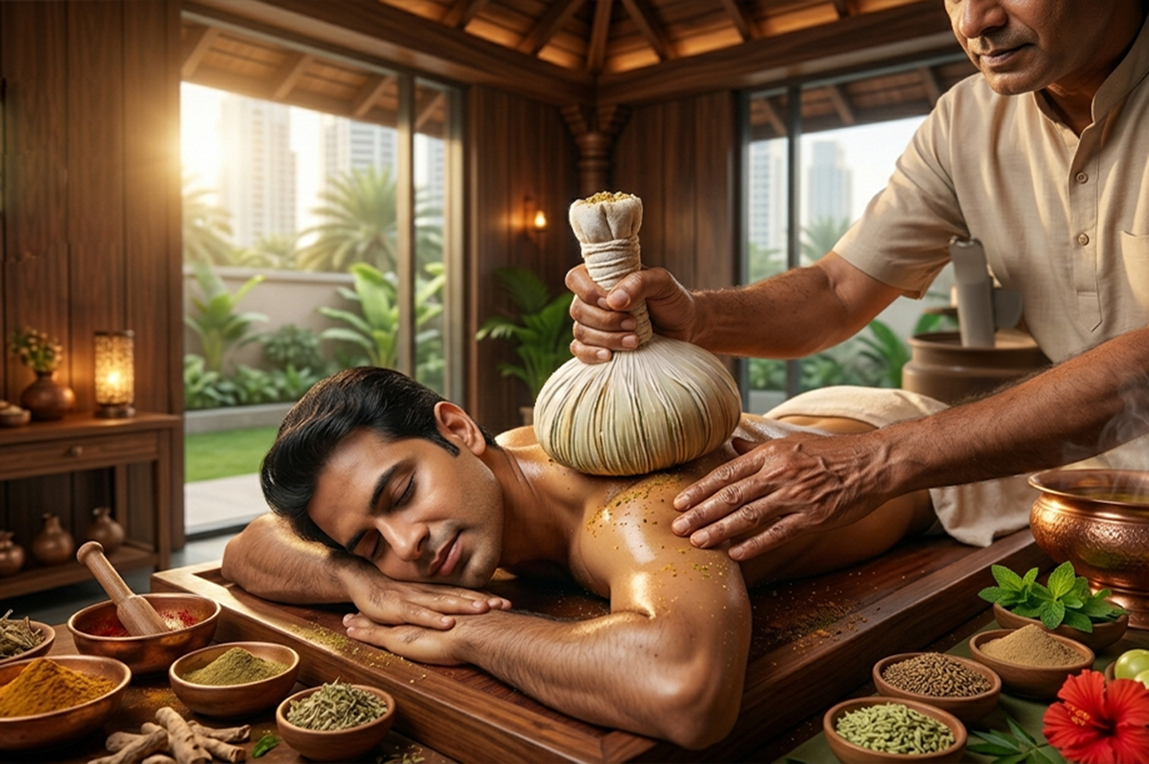
Kizhi Ayurveda: A Traditional Healing Therapy for Modern Wellness Ayurveda, the ancient system of natural healing from India, offers a wide range of therapies designed to restore balance in the body and mind. One such powerful and rejuvenating treatment is Kizhi, a specialized therapy known for its effectiveness in relieving pain, improving circulation, and promoting overall well being. What is Kizhi Therapy? Kizhi is a traditional Ayurvedic treatment that involves the use of herbal poultices (bundles) filled with medicinal herbs, powders, or rice. These bundles are heated in herbal oils and then rhythmically applied to the body. The therapy combines the benefits of heat, herbal medicine, and therapeutic massage, making it a deeply relaxing and healing experience. The word “Kizhi” refers to the pouch or bundle used during the treatment. Depending on the condition being treated, different types of Kizhi are used. Types of Kizhi Treatments There are several variations of Kizhi therapy, each designed for specific health concerns: Ela Kizhi (Leaf Poultice): Uses medicinal leaves fried in herbal oils, ideal for joint pain and inflammation. Podi Kizhi (Powder Poultice): Contains herbal powders, helpful for obesity, stiffness, and detoxification. Njavara Kizhi (Rice Poultice): Made with medicated rice cooked in milk and herbs, used for rejuvenation and nourishment. Each type targets different imbalances in the body, particularly those related to the Vata dosha, which is often responsible for pain and stiffness. Benefits of Kizhi Therapy Kizhi therapy offers a wide range of health benefits, making it popular in Ayurvedic clinics worldwide: Relieves Joint and Muscle Pain: Highly effective for arthritis, back pain, and sports injuries. Improves Blood Circulation: The heat and massage stimulate better flow of blood and oxygen. Reduces Inflammation: Herbal ingredients help reduce swelling and stiffness. Detoxifies the Body: Helps eliminate toxins (Ama) from tissues. Enhances Skin Health: Improves texture and promotes natural glow. Promotes Relaxation: Reduces stress and calms the nervous system. How the Treatment is Performed A typical Kizhi session begins with a gentle oil massage to prepare the body. The herbal bundles are then heated and applied to specific areas or the entire body using synchronized movements. The therapist continuously reheats the bundles to maintain optimal temperature. The duration of the treatment usually ranges from 30 to 60 minutes, depending on the condition and type of Kizhi used. It is often recommended as part of a broader Ayurvedic treatment plan, such as Panchakarma detox. Who Can Benefit from Kizhi? Kizhi therapy is suitable for individuals suffering from: Chronic pain conditions like arthritis and spondylosis Muscle stiffness and fatigue Sports injuries Neurological disorders Stress and anxiety However, it may not be suitable for people with certain conditions like high fever, skin infections, or pregnancy. A consultation with an Ayurvedic practitioner is essential before starting the therapy. Kizhi Ayurveda therapy is a powerful blend of traditional wisdom and therapeutic technique. By combining heat, herbs, and massage, it addresses both physical discomfort and mental stress. Whether you’re seeking pain relief, detoxification, or relaxation, Kizhi offers a natural and holistic path to wellness perfectly suited for today’s fast-paced lifestyle. Frequently Asked Questions (FAQ)  1. What is Kizhi therapy in Ayurveda? Kizhi is a traditional Ayurvedic treatment where warm herbal poultices (bundles) are applied to the body to relieve pain, reduce inflammation, and improve circulation. 2. Is Kizhi therapy painful? No, Kizhi therapy is generally relaxing and soothing. The heat and rhythmic movements help ease muscle tension rather than cause discomfort. 3. How long does a Kizhi session take? A typical session lasts between 30 to 60 minutes, depending on the treatment plan and the patient’s condition. 4. How many sessions are required for best results? Usually, 7 to 14 sessions are recommended for noticeable results. However, the exact number depends on the severity of the condition. https://dhanwanthari.ae/

Shirodhara massage therapy in Dubai for stress relief
Alternative Medicine, Blog, Healthy Lifestyle, Holistic Health Care, Homeopathy, Integrative Medicine, Success Stories, Weight and Dieting

Shirodhara Massage – The Ultimate Ayurvedic Therapy for Mind & Body

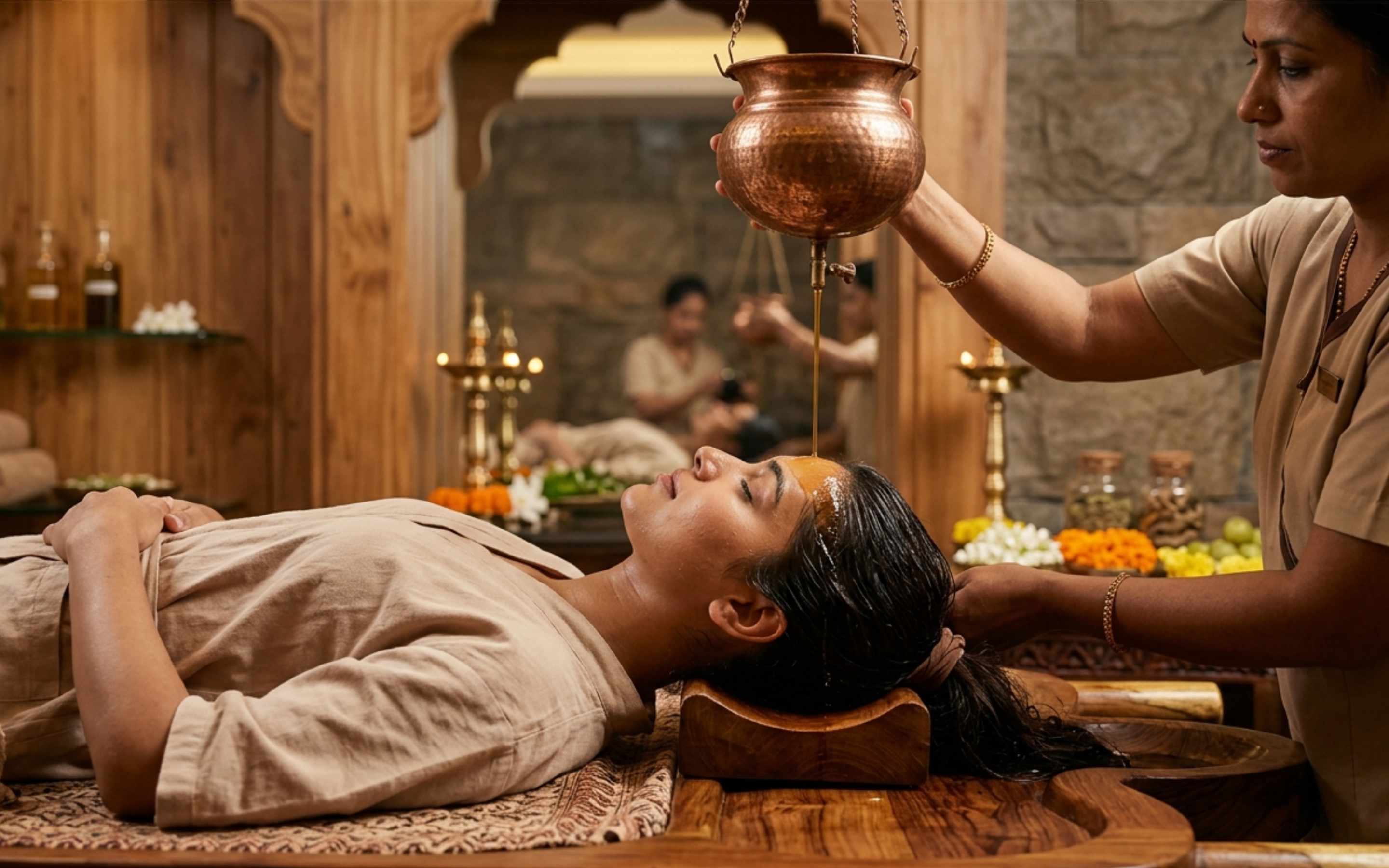
Shirodhara Massage – The Ultimate Ayurvedic Therapy for Mind & Body Shirodhara massage is a powerful Ayurvedic therapy known for its calming and rejuvenating effects on the mind and body. At Dhanwanthari Ayurvedic Medical Center LLC Dubai, this traditional treatment is widely recommended for stress relief, mental clarity, and holistic wellness. If you are struggling with anxiety, insomnia, or mental fatigue, Shirodhara massage can be your natural solution. What is Shirodhara? Shirodhara  involves gently pouring warm herbal oil or medicated liquids over the forehead in a continuous stream. This rhythmic flow targets the “third eye” area, promoting deep relaxation and balancing the nervous system. This therapy is rooted in Ayurveda and is especially effective in calming aggravated Vata and Pitta doshas. Benefits of Shirodhara  The growing popularity of Shirodhara massage in Dubai is due to its wide range of benefits: Relieves stress and anxiety Improves sleep quality (helps with insomnia) Enhances mental clarity and focus Reduces headaches and migraines Supports emotional balance Improves scalp and hair health Regular sessions of Shirodhara massage can significantly improve overall well-being. Why Choose Shirodhara  in Dubai? Living in a fast-paced city like Dubai can lead to chronic stress and burnout. Choosing Shirodhara  at Dhanwanthari Ayurvedic Medical Center LLC Dubai ensures: Authentic Ayurvedic therapies Experienced Ayurvedic practitioners Customized herbal oils based on your body type Peaceful and healing environment Who Should Try ? Shirodhara  is ideal for: Professionals dealing with stress People with sleep disorders Individuals experiencing anxiety or depression Those seeking natural healing therapies Anyone looking for deep relaxation Experience Authentic Ayurvedic Healing At Dhanwanthari Ayurvedic Medical Center LLC Dubai, every Shirodhara  session is designed to deliver maximum therapeutic benefits. The treatment not only relaxes your mind but also revitalizes your entire body. Explore our Ayurvedic Treatments page Learn about Panchakarma Therapy Check our Stress Management Programs If you are looking for a natural way to relieve stress and restore balance, Shirodhara massage in Dubai is the perfect solution. Visit the best ayurvedic clinic in dubai, Dhanwanthari Ayurvedic Medical Center LLC , and experience the true essence of Ayurvedic healing. dhanwanthariuae  FAQ – Shirodhara in Dubai 1. What is Shirodhara? Shirodhara is a traditional Ayurvedic therapy where warm herbal oil is poured continuously on the forehead to calm the mind and relax the nervous system. 2. What are the benefits of Shirodhara? Shirodhara  helps reduce stress, improve sleep, relieve anxiety, enhance mental clarity, and support overall emotional balance. 3. How long does a Shirodhara session take? A typical Shirodhara  session lasts between 30 to 60 minutes, depending on individual health needs and treatment plans. 4. Is Shirodhara safe? Yes, Shirodhara  is a safe and natural therapy when performed by trained Ayurvedic professionals using high-quality herbal oils. 5. Who should take Shirodhara ? It is ideal for people suffering from stress, insomnia, anxiety, headaches, and those seeking deep relaxation and mental wellness. 6. How many sessions are needed for best results? For optimal benefits, 5–7 sessions of Shirodhara massage are usually recommended, but it may vary based on individual conditions. 7. Can Shirodhara help with sleep problems? Yes, Shirodhara massage is highly effective in treating insomnia and improving sleep quality naturally. 8. Where can I get the best Shirodhara in Dubai? You can experience authentic Shirodhara massage at Dhanwanthari Ayurvedic Medical Center LLC Dubai, known for its traditional and professional Ayurvedic treatments.

Ayurvedic dr consultation in Dubai
Alternative Medicine, Blog, Healthy Lifestyle, Holistic Health Care, Homeopathy, Integrative Medicine, Success Stories, Weight and Dieting

Ayurvedic Dr in Dubai | Expert Natural Healing & Personalized Care

Ayurvedic Dr in Dubai – Your Guide to Natural Healing Finding the right Ayurvedic doctor is essential for achieving long-term health and balance. Ayurveda, the ancient Indian system of medicine, focuses on treating the root cause of illness rather than just symptoms. A qualified Ayurvedic doctor in Dubai offers personalized therapies, herbal remedies, and lifestyle guidance tailored to your body constitution. At Dhanwanthari Ayurveda, experienced doctors combine traditional knowledge with modern understanding to provide effective and natural healing solutions. Why Choose an Ayurveda Doctor for Your Health? An Ayurvedic doctor looks beyond surface-level symptoms and focuses on restoring balance within the body. Treatments are customized based on your dosha (Vata, Pitta, Kapha), ensuring a holistic approach to wellness. Benefits of Consulting an Ayurveda Doctor Natural and chemical-free treatments Focus on root cause healing Personalized diet and lifestyle plans Long-term wellness and prevention Effective stress and pain management Whether you are dealing with chronic pain, digestive issues, or stress, an experienced Ayurvedic doctor in Dubai can guide you toward sustainable health. Treatments Offered by an Ayurveda Doctor A professional Ayurvedic doctor provides a wide range of treatments designed to detoxify, rejuvenate, and heal the body naturally. Popular Ayurvedic Treatments Panchakarma detox therapy Abhyanga (therapeutic oil massage) Shirodhara for stress relief Nasyam for sinus and respiratory issues Herbal medicine and diet therapy 👉 Learn more about our ayurveda-treatment-dubai👉 Book a consultation with our ayurvedic-consultation“ expert Ayurveda dr How to Choose the Best Ayurveda Doctor in Dubai Selecting the right Ayurvedic dr is important for achieving effective results. Here are some key factors to consider: What to Look For DHA licensed practitioners Years of clinical experience Authentic Ayurveda practices Positive patient reviews Clean and professional clinic environment At Dhanwanthari Ayurveda, our doctors are highly trained and experienced in delivering authentic Ayurvedic care. Experience Holistic Healing with an Ayurveda Doctor A skilled Ayurvedic doctor in Dubai not only treats illness but also helps you maintain balance in everyday life. At the best Ayurvedic clinic in Dubai, treatments like proper diet, herbal medicine, and detox therapies promote complete physical and mental well-being. FAQ  What does an Ayurveda doctor do? An Ayurvedia dr diagnoses health issues based on body constitution and provides natural treatments, herbal medicines, and lifestyle advice. Is Ayurvedic treatment safe? Yes, treatments by a qualified Ayurvedic doctor are safe, natural, and free from harmful chemicals. How long does Ayurvedic treatment take? The duration depends on the condition, but Ayurveda focuses on long-term healing rather than quick fixes. Can an Ayurvedic dr treat chronic diseases? Yes, Ayurveda is effective in managing chronic conditions like arthritis, migraine, and digestive disorders. Do I need a consultation before treatment? Yes, a consultation with an Ayurvedic doctor is necessary to understand your body type and create a personalized treatment plan.

Scroll to Top

Enquiry Now

 Be in touch.