
After a long day at work, do your shoulders feel tense, your muscles tired, or your body unusually stiff? Many people consider massage to relax and feel more comfortable. But when searching for massage options, you may come across a traditional Ayurvedic therapy called Abhyangam.
Abhyangam vs regular massage is a common comparison for people who want to understand whether traditional Ayurvedic oil massage is different from a conventional spa or relaxation massage.
Both approaches involve touch and bodywork, but they differ in their origins, techniques, oil selection and treatment philosophy.
Abhyangam is rooted in Ayurveda and traditionally involves warm oils applied through systematic massage movements. Regular massage can include several techniques, such as Swedish massage, deep-tissue massage and sports massage.
Understanding these differences can help you choose an approach that suits your preferences, health needs and wellness goals.
What Is Abhyangam in Ayurveda?
Abhyangam, also called Abhyanga, is a traditional Ayurvedic oil massage practiced as part of Ayurveda’s approach to wellbeing.
It involves applying selected oils to the body using rhythmic massage movements. Depending on the traditional practice and individual requirements, the oils may be warmed before application.
In Ayurveda, Abhyangam is associated with Dinacharya, a set of daily routines intended to support overall wellbeing.
Traditional Ayurvedic practitioners may consider a person’s Prakriti, or body constitution, when selecting oils and recommending massage techniques.
Ayurveda describes three Doshas:
- Vata: Traditionally associated with movement, dryness and lightness.
- Pitta: Associated with heat and transformation.
- Kapha: Associated with stability and structure.
These are concepts from traditional Ayurveda rather than modern medical diagnoses.
People interested in the clinical procedure can read more about Abhyanga Treatment in Dubai at Dhanwanthari Ayurvedic Medical Centre.
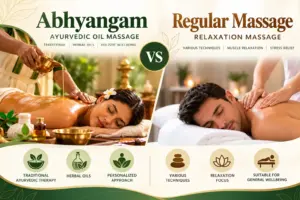
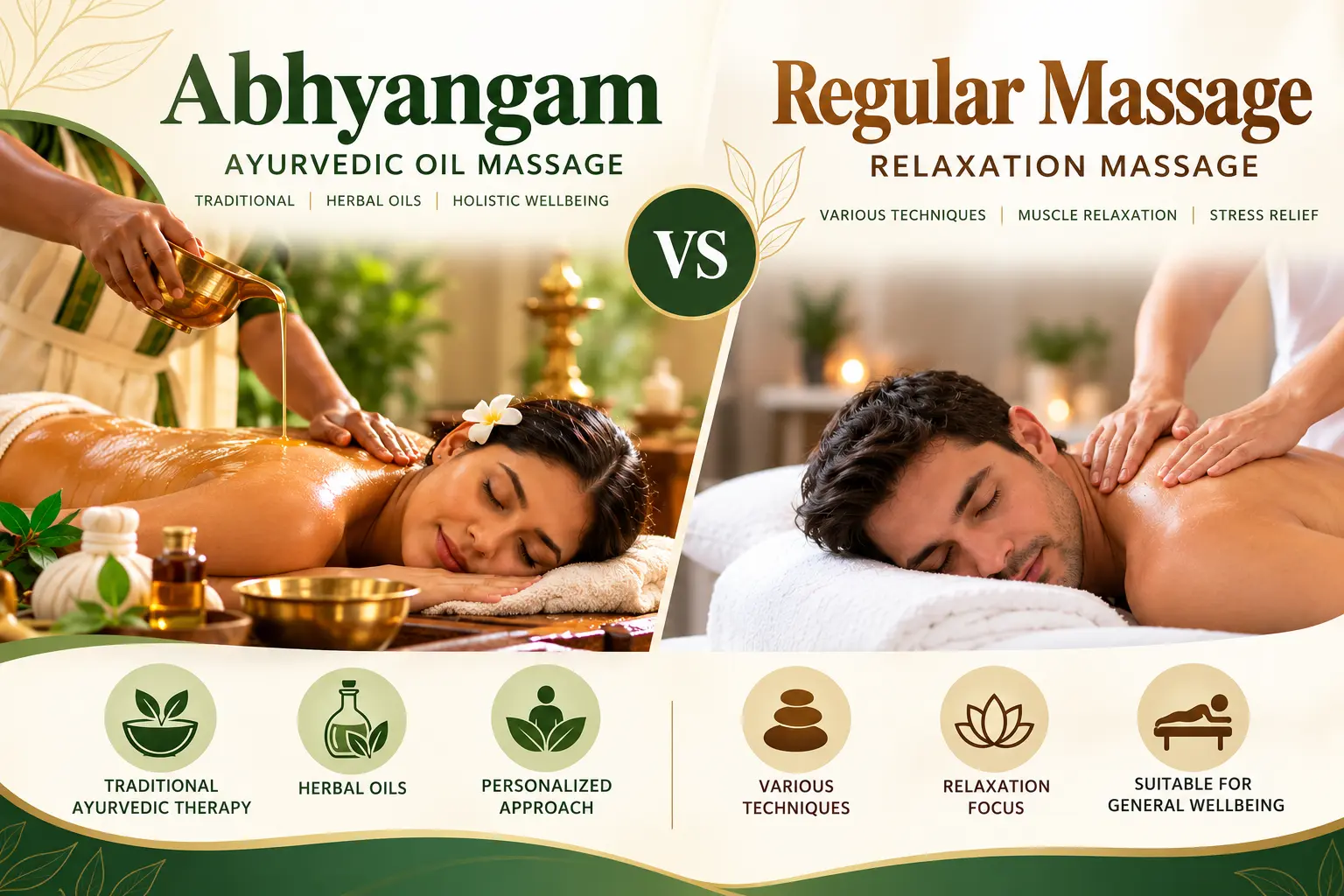
Abhyangam vs Regular Massage: Key Differences
Although both involve massage, their traditional approaches and techniques are different.
| Feature | Abhyangam | Regular Massage |
|---|---|---|
| Origin | Traditional Indian Ayurveda | Various massage traditions |
| Oil application | Selected oils are a central component | Oils or lotions may be used |
| Technique | Rhythmic movements based on Ayurvedic practice | Depends on the massage style |
| Personalization | May consider Ayurvedic constitution and individual needs | Based on preferences, symptoms and therapist assessment |
| Main purpose | Traditional wellbeing and relaxation | Relaxation, muscle comfort or specific soft-tissue goals |
| Treatment approach | May be part of a broader Ayurvedic care plan | Usually provided as a standalone or complementary service |
One important distinction is that Abhyangam is not simply a deep-tissue massage performed with herbal oil.
Its traditional approach emphasizes oil application, systematic movements and individualized Ayurvedic assessment.
However, neither type of massage should automatically be considered more effective than the other.
How Is Abhyangam Performed?
A professional Abhyangam session generally follows a structured process. The exact method may vary depending on the clinic and the person’s requirements.
1. Initial Consultation
Before the therapy, the practitioner may review the person’s medical history, physical concerns, allergies and wellness goals.
This assessment helps determine whether the therapy is appropriate.
2. Selection of Ayurvedic Oil
The practitioner selects an oil based on the intended traditional purpose of the massage and individual suitability.
Sesame-based oils and herbal oil preparations are commonly associated with Ayurvedic massage.
3. Warm Oil Application
The selected oil may be gently warmed before being applied to the body.
The temperature should remain comfortable and safe, particularly for people with sensitive skin.
4. Rhythmic Massage
The therapist applies the oil through systematic movements.
Pressure, duration and the areas treated may vary according to the person’s needs.
5. Post-Massage Care
After the session, the practitioner may provide guidance regarding bathing, rest and appropriate daily activities.
The objective is to provide a comfortable, individualized experience rather than follow the same routine for everyone.
Traditional Benefits of Abhyangam
Abhyangam has traditionally been used as part of Ayurvedic wellness practices.
Its intended benefits include:
- Encouraging physical relaxation
- Supporting a sense of calm and comfort
- Helping reduce the feeling of everyday muscle tightness
- Softening and moisturizing the skin
- Supporting a regular self-care routine
- Promoting general wellbeing
These are traditional uses and potential comfort-related benefits, not guaranteed medical outcomes.
Massage therapy has been studied for certain types of pain and muscular discomfort. However, the strength of the evidence varies, and research on massage generally cannot establish that Abhyangam treats a specific medical condition.
According to the National Center for Complementary and Integrative Health (NCCIH), massage may provide short-term relief for some conditions, but evidence is limited for several applications.
Why Are Oils Important in Abhyangam?
Oil application is one of the defining features of traditional Abhyangam.
Unlike some conventional massage techniques that use only a small quantity of oil or lotion, Abhyangam generally involves more extensive oil application.
Traditional Herbal Oils
Ayurvedic practitioners may select oils prepared with different herbs according to traditional formulations.
The specific ingredients and preparation methods can vary.
Personalized Selection
Oil selection may take into account skin sensitivity, allergies, personal comfort and the intended purpose of the session.
Skin Comfort
Massage oils can help lubricate the skin and reduce friction during massage movements.
However, herbal oils are not automatically suitable for everyone. People with allergies or sensitive skin should discuss the ingredients with their practitioner before treatment.
Is Abhyangam Better Than a Regular Spa Massage?
There is no universal answer.
If your main goal is relaxation, a suitable conventional massage may meet your needs.
If you are interested in traditional Ayurvedic practices, personalized herbal oil selection and an Ayurveda-based approach, Abhyangam may be worth considering.
The choice should depend on:
- Your primary reason for seeking massage
- Your health history
- Your preference for oils and massage pressure
- Any existing medical concerns
- The qualifications and training of the practitioner
The most important factor is whether the therapy is appropriate and safely performed.
Who May Consider Abhyangam?
Abhyangam may appeal to adults interested in traditional oil-based massage for relaxation and general wellbeing.
It may be considered by people who:
- Experience occasional muscle tightness after routine activities
- Spend long hours sitting at work
- Prefer traditional oil massage
- Want to include relaxation in their wellness routine
- Are interested in Kerala Ayurvedic practices
However, persistent pain, numbness, weakness or recurring joint problems should not be managed through massage alone without appropriate medical evaluation.
For example, pain radiating from the lower back into the leg may be associated with sciatica. Our article Pain Shooting Down Your Leg: How to Recognise Sciatica and When to Seek Help explains the symptoms that may require further assessment.
When Should Abhyangam Be Avoided?
Massage is not appropriate for everyone.
Abhyangam may need to be postponed, avoided or modified in certain situations, including:
- Fever or acute illness
- Open wounds or active skin infections
- Recent fractures or significant injuries
- Suspected blood clots
- Allergies to herbal oils
- Certain bleeding or circulatory conditions
People who are pregnant, recovering from surgery or receiving treatment for serious medical conditions should discuss massage suitability with their healthcare professional.
Oil temperature, massage pressure and skin reactions should also be monitored during the procedure.
A qualified practitioner should explain the therapy and any relevant precautions before beginning.
Can Abhyangam Help with Back Pain or Joint Stiffness?
Abhyangam is traditionally used for relaxation and physical comfort, and some people seek it when experiencing general stiffness.
However, back pain and joint discomfort can have different underlying causes.
A person with muscle tightness after prolonged sitting may require a different approach from someone with arthritis, nerve compression or a spinal condition.
For people experiencing radiating lower-back and leg pain, Dhanwanthari Ayurveda provides information about Sciatica Ayurvedic Treatment in Dubai.
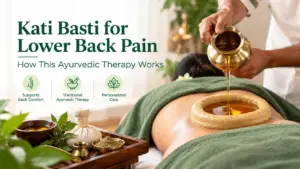
Similarly, Kati Vasthi is a different traditional Ayurvedic procedure involving localized warm-oil retention over the back rather than full-body massage.
A professional assessment helps determine whether massage is suitable or whether another type of evaluation is needed.
Expert Perspective: Dr Sathya K. Pillai
Medical Director & Chief Physician – Dhanwanthari Ayurvedic Medical Centre, Dubai
At Dhanwanthari Ayurveda, traditional therapies such as Abhyangam are approached through individualized Ayurvedic care.
Dr. Sathya K. Pillai, Medical Director and Chief Physician, emphasizes the importance of understanding each patient’s health condition, treatment needs and overall wellbeing before selecting suitable Ayurvedic therapies.
Abhyangam involves traditional oil application and massage techniques, but the choice of oil, massage pressure and treatment approach should consider individual health requirements.
Patients experiencing persistent muscle pain, joint stiffness or other physical concerns should undergo appropriate assessment rather than selecting massage therapy without professional guidance.
Learn more about Dr. Sathya K. Pillai – Ayurvedic Doctor in Dubai
Choosing Between Abhyangam and Regular Massage
If you are unsure which massage to choose, consider asking a few questions before booking.
What is your main goal?
Are you looking for general relaxation, a traditional wellness experience or guidance about physical discomfort?
Do you have any medical concerns?
Existing injuries, allergies and certain health conditions may influence the suitability of massage.
What oils will be used?
Ask about ingredients and mention any previous skin reactions.
Who will perform the therapy?
Choose a suitably trained practitioner who can explain the procedure and adapt it to your needs.
What should you expect afterward?
Understand the recommended aftercare and whether any additional sessions are appropriate.
Making an informed decision is more important than assuming one type of massage is suitable for everyone.
Abhyangam and Traditional Ayurvedic Care in Dubai
For people interested in traditional Kerala Ayurveda, understanding the difference between Abhyangam and regular massage is a useful starting point.
At Dhanwanthari Ayurvedic Medical Center in Bur Dubai, patients can discuss their wellness goals and suitability for traditional Ayurvedic therapies during a consultation.
The clinic offers practitioner-guided Ayurvedic Treatment in Dubai, including Abhyangam and other traditional procedures.
A consultation helps clarify the therapy process, oil selection, precautions and realistic expectations.
FAQs
1. What is the main difference between Abhyangam and regular massage?
Abhyangam is a traditional Ayurvedic oil massage that uses selected oils and rhythmic techniques based on Ayurvedic principles. Regular massage includes several styles with different methods and treatment goals.
2. Is Abhyangam better than regular massage?
Neither is automatically better. The choice depends on individual preferences, health conditions and wellness goals. Abhyangam may appeal to people interested in traditional Ayurvedic oil massage, while conventional massage offers other techniques and approaches.
3. What oils are used in Abhyangam massage?
Abhyangam traditionally uses oils such as sesame-based preparations and selected herbal oils. The specific oil depends on the practitioner’s assessment, individual needs and any relevant allergies or skin sensitivities.
4. Can Abhyangam help with muscle stiffness?
Abhyangam is traditionally used to support relaxation and physical comfort. Some people may experience temporary relief from everyday muscle tightness, but it should not replace medical evaluation for persistent pain or other concerning symptoms.
5. Is Abhyangam massage safe for everyone?
No. People with certain skin conditions, acute illness, injuries, suspected blood clots or other medical concerns may need to avoid or modify massage. Professional assessment is recommended before treatment.
Conclusion
Understanding Abhyangam vs regular massage can help you make a more informed choice about your wellness routine.
Both involve hands-on bodywork, but Abhyangam is distinguished by its traditional Ayurvedic principles, selected oils and systematic massage techniques.
For those interested in a traditional Ayurvedic experience, Abhyangam may be considered as part of an individualized wellness plan.
However, therapy selection should always take personal health needs, safety and realistic expectations into account.
Book an Ayurvedic Consultation in Bur Dubai
Interested in experiencing traditional Abhyangam massage?
At Dhanwanthari Ayurvedic Medical Center, our team can guide you through the available therapies and help determine which approach may be suitable for your needs.
Address: Suite #210, 2nd Floor, Al Ain Shopping Centre, Computer Plaza, Near Sharaf DG Metro Station, Exit 1, Bur Dubai, UAE.
WhatsApp: +971 50 779 6303
Telephone: +971 4 220 8421
Website: https://dhanwanthari.ae/
View Abhyanga Treatment in Dubai
Medical disclaimer: This article is for general educational purposes and does not replace professional medical advice, diagnosis or treatment.