
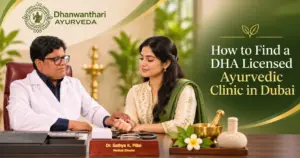
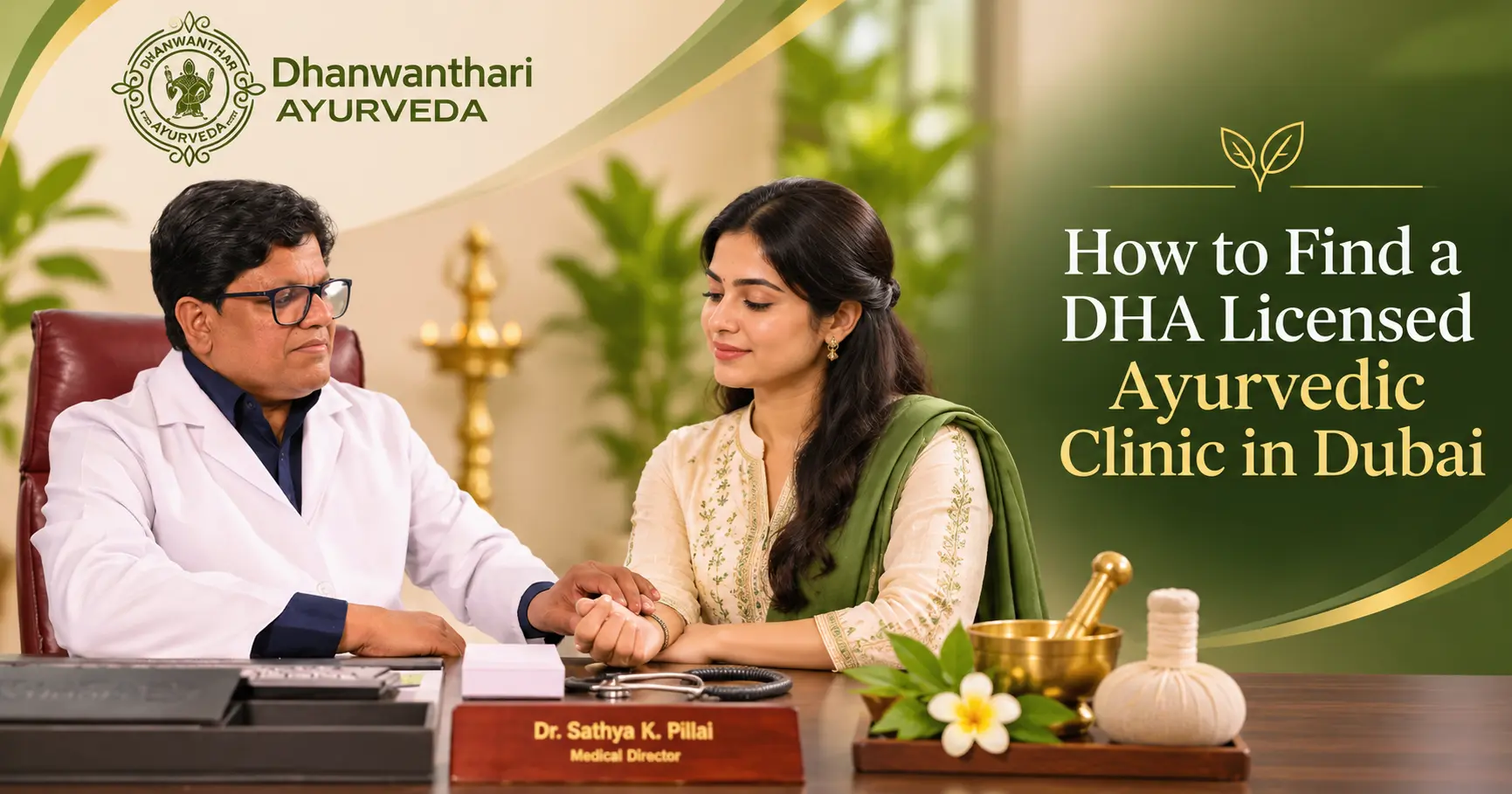

Finding a DHA-licensed Ayurvedic clinic in Dubai is an important consideration when exploring traditional Ayurvedic healthcare. While Dubai offers various Ayurvedic treatment centres, massage facilities and wellness establishments, understanding their professional credentials can help patients make informed decisions.
Whether you are considering a personalised Ayurvedic consultation, traditional Kerala therapies or specialised treatments, checking practitioner qualifications and healthcare facility licences is a valuable first step.
Choosing a professional Ayurvedic clinic in Dubai involves understanding the clinic’s services, practitioner expertise, treatment procedures and patient safety practices.
This guide explains how to verify Ayurvedic clinic credentials, understand healthcare licensing in Dubai and identify important factors before booking a treatment.
What Is a DHA Licensed Ayurvedic Clinic in Dubai?
A DHA-licensed Ayurvedic clinic is a healthcare facility authorised by the Dubai Health Authority to operate within its approved scope of healthcare services.
The Dubai Health Authority oversees healthcare professional and facility licensing within its jurisdiction.
Through its Sheryan licensing platform, DHA manages the registration and licensing of healthcare professionals and facilities.
Patients can use official DHA resources to check professional credentials and healthcare facility information before making treatment decisions.
A valid healthcare licence is an important regulatory requirement, but it does not guarantee specific treatment outcomes or establish that every advertised therapy is suitable for every patient.
Why Professional Credentials Matter in Ayurvedic Healthcare
Ayurvedic healthcare involves various traditional assessment methods, herbal preparations, dietary recommendations and specialised therapies.
Some procedures require individual assessment and particular precautions, especially for patients with existing medical conditions.
Verifying professional credentials helps patients understand:
- The practitioner’s professional qualifications.
- Whether the practitioner holds an active healthcare licence.
- The practitioner’s authorised professional specialty.
- The healthcare facility where the practitioner works.
- Whether the proposed treatment falls within the relevant professional scope.
Patients should also feel comfortable discussing treatment limitations, potential risks and alternative healthcare options.
How to Verify an Ayurvedic Doctor’s DHA Licence
Dubai Health Authority provides an official online service that allows patients to verify the registration and licensing status of healthcare professionals.
Step 1: Visit the Official DHA Website
Visit the Dubai Health Licensing System – Sheryan.
The platform provides access to healthcare licensing information and the Dubai Medical Registry.
Step 2: Search for the Ayurvedic Practitioner
Use the Dubai Medical Registry to look up the healthcare professional.
Alternatively, ask the clinic for the practitioner’s DHA Unique ID or professional licence number.
Step 3: Verify the Professional Licence
Open the official DHA Professional Licence Verification Service.
Enter either the professional licence number or DHA Unique ID and search for the relevant record.
Step 4: Review the Available Information
Check the professional details, including:
- Practitioner name
- Professional specialty
- Licence status
- Associated healthcare facility
- Licence issue and expiry dates
An active professional licence is important because registration alone does not necessarily mean a practitioner is currently authorised to practise at a particular facility.
If any information is unclear, contact the clinic or Dubai Health Authority for clarification.
Understanding Ayurvedic Practitioner Qualifications
Professional qualifications are another important consideration when selecting an Ayurvedic healthcare provider.
Bachelor of Ayurvedic Medicine and Surgery (BAMS)
BAMS is a professional undergraduate qualification in Ayurvedic medicine awarded by recognised institutions in India.
The programme generally includes traditional Ayurvedic principles, clinical subjects and practical training.
However, possessing a BAMS qualification alone does not automatically authorise someone to practise Ayurveda in Dubai. The practitioner must also meet applicable local licensing requirements.
Postgraduate Ayurvedic Qualifications
Some practitioners may hold postgraduate qualifications such as MD Ayurveda in specific areas of Ayurvedic medicine.
Patients can ask about these qualifications, relevant clinical experience and areas of professional practice.
Professional Experience and Scope of Practice
Experience is important, particularly when considering specialised procedures such as Panchakarma or traditional therapeutic massage.
Patients should understand the difference between an Ayurvedic practitioner providing consultations and a therapist performing specific massage procedures.
Each professional should work within their authorised scope of practice.
How to Verify an Ayurvedic Clinic’s Licence in Dubai
In addition to checking individual practitioner credentials, patients should verify the healthcare facility’s licensing information.
The Dubai Medical Registry provides a public directory of healthcare professionals and facilities under DHA.
When checking an Ayurvedic healthcare facility, consider the following:
- Registered facility name
- Physical location
- Facility licence information
- Available healthcare services
- Associated healthcare professionals
If a clinic operates multiple branches, verify the location where your consultation or treatment will take place.
Different branches may offer different services. A pharmacy, wellness establishment and medical centre should not automatically be assumed to provide the same clinical treatments.
Ayurvedic Clinic vs Wellness Centre: What Is the Difference?
Traditional Ayurvedic services may be available in both healthcare facilities and wellness establishments. However, their purpose and authorised services may differ.
| Feature | Ayurvedic healthcare clinic | Wellness or massage centre |
|---|---|---|
| Primary focus | Practitioner-led healthcare and traditional therapeutic services | Relaxation and general wellbeing |
| Consultation | May offer formal Ayurvedic consultations | Depends on the establishment’s authorised services |
| Treatment planning | May involve individual clinical assessment | Often based on wellness service preferences |
| Professional credentials | Relevant healthcare professional licensing | Qualifications depend on the services offered |
| Specialised procedures | Subject to facility and practitioner authorisation | Limited to permitted services |
A wellness centre may be suitable for general relaxation services. However, patients seeking assessment of health concerns should consult an appropriately qualified healthcare professional.
6 Questions to Ask Before Booking an Ayurvedic Treatment
Before choosing an Ayurvedic healthcare facility, consider asking these questions.
1. Is the Practitioner Currently Licensed?
Ask about the practitioner’s healthcare licence and professional qualifications. Verify the information through the appropriate official resources.
2. Is the Healthcare Facility Licensed?
Confirm that the facility is authorised to provide the services you are considering.
3. Will I Receive an Individual Assessment?
Ask whether the practitioner reviews your medical history, current medications, allergies and individual concerns before recommending a procedure.
4. What Treatments Are Available?
Understand which traditional Ayurvedic therapies are offered and how their suitability is assessed.
Common traditional procedures include Abhyangam, Shirodhara, Kizhi and Panchakarma-related therapies.
If you are interested in Ayurvedic massage in Dubai, ask about the techniques, practitioner supervision and relevant precautions.
5. Are Treatment Risks and Limitations Explained?
A responsible healthcare professional should explain what a proposed treatment involves, its potential risks and limitations, and circumstances in which it may not be appropriate.
Be cautious about claims promising guaranteed cures or encouraging patients to discontinue necessary medical treatment.
6. Are Treatment Costs and Follow-Up Arrangements Clear?
Ask about consultation fees, treatment duration, estimated costs and whether follow-up visits are recommended.
Transparent communication can help patients make more informed decisions before beginning a treatment programme.
Finding Professional Ayurvedic Care at Dhanwanthari Ayurveda
Dhanwanthari Ayurvedic Medical Center in Bur Dubai offers traditional Ayurvedic consultations and Kerala Ayurvedic therapies.
The clinic’s approach includes individual consultations that consider personal health concerns, lifestyle, medical history and traditional Ayurvedic assessments.
Patients can explore available services such as Abhyangam, Shirodhara and other traditional Ayurvedic procedures.
Those interested in personalised care can learn more about the Ayurvedic consultation process at Dhanwanthari.
Before booking, patients are encouraged to discuss practitioner credentials, treatment suitability, appointment availability and any relevant health concerns directly with the clinic.
FAQs
How can I check if an Ayurvedic doctor is DHA licensed?
You can use the official DHA professional licence verification service by entering the practitioner’s DHA Unique ID or licence number. The service displays available registration and licence information.
Is a BAMS qualification sufficient to practise Ayurveda in Dubai?
No. A BAMS qualification represents professional education in Ayurvedic medicine, but practitioners must also satisfy the applicable healthcare licensing requirements before practising in Dubai.
Are all Ayurvedic massage centres in Dubai medical clinics?
No. Some establishments focus on wellness and relaxation services rather than clinical healthcare. Patients should verify the facility’s authorised activities before booking.
How do I choose the best Ayurvedic clinic in Dubai?
Consider verified practitioner credentials, facility licensing, individual consultations, hygiene practices, treatment transparency, patient experiences and appropriate safety precautions.
Is DHA registration the same as an active professional licence?
No. Professional registration indicates eligibility for a registered professional position, while an active licence authorises practice according to applicable licensing conditions.
Does a DHA licence guarantee successful Ayurvedic treatment?
No. Licensing establishes regulatory authorisation, not guaranteed clinical outcomes. Treatment suitability and results vary depending on individual circumstances and the procedure involved.
Final Thoughts
Choosing a DHA-licensed Ayurvedic clinic in Dubai begins with verifying professional credentials, understanding healthcare facility licensing and asking meaningful questions about treatment procedures.
A suitable clinic should provide clear information about its practitioners, available services, safety precautions and individual consultation process.
Taking these steps can help you make informed decisions when exploring traditional Ayurvedic healthcare.
Looking for traditional Ayurvedic care in Dubai? Visit Dhanwanthari Ayurveda to explore its practitioner profiles, consultation services and traditional Kerala therapies.