



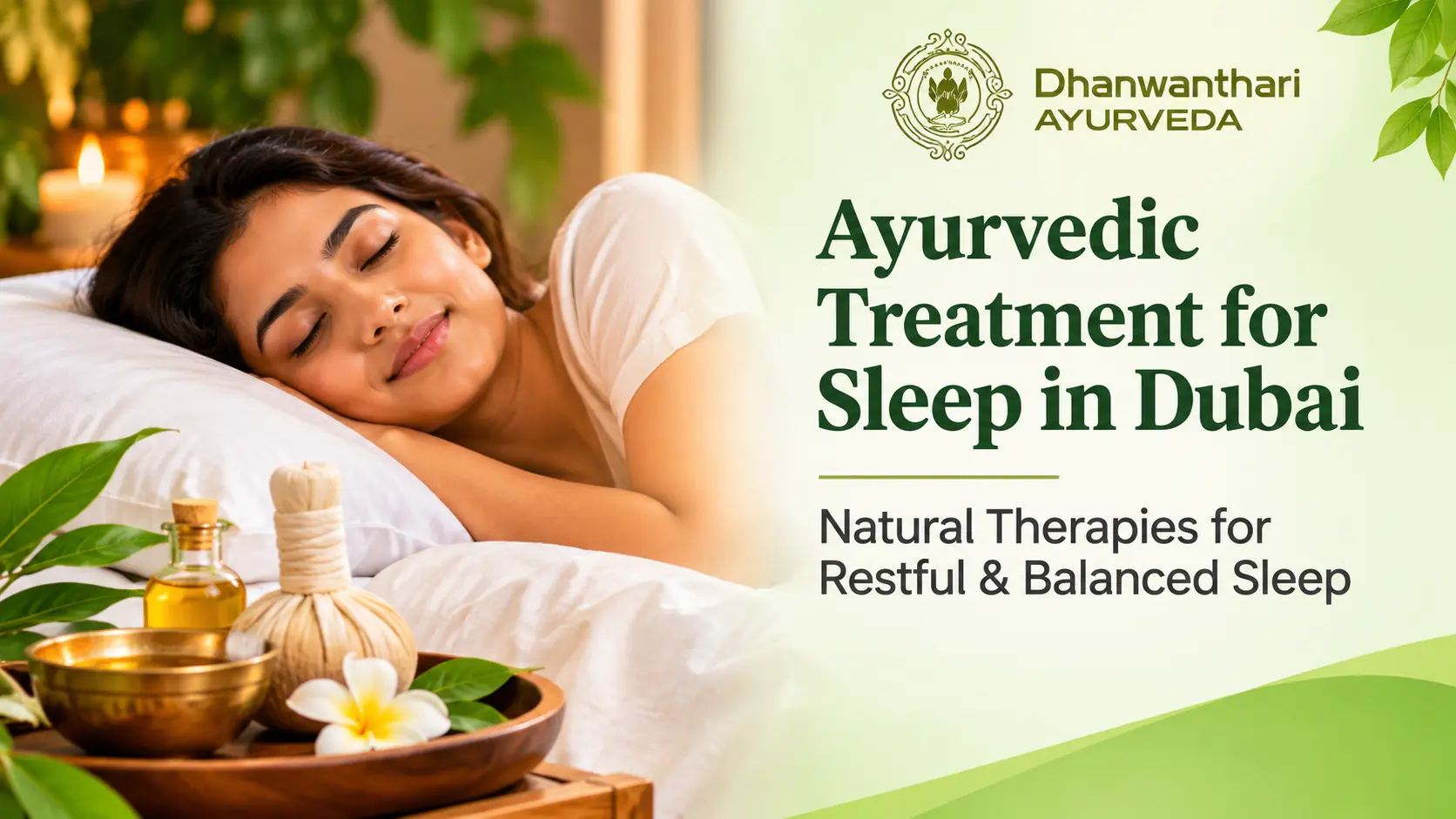

Are you struggling to fall asleep, waking up frequently during the night, or feeling exhausted in the morning? Sleep difficulties can affect your energy, concentration, mood, and overall well-being.
For people exploring Ayurvedic treatment for sleep in Dubai, traditional relaxation therapies and healthy lifestyle practices may offer complementary support.
In Ayurveda, sleeplessness is commonly described as Nidranasha. Ayurvedic practitioners consider sleep an important part of maintaining physical and mental balance.
At Dhanwanthari Ayurvedic Medical Center LLC in Bur Dubai, qualified Ayurvedic practitioners provide personalised consultations and traditional Kerala therapies based on individual needs.
This guide explains the Ayurvedic understanding of sleeplessness, six traditional therapies, practical home care tips, and important safety considerations.
Understanding Sleep Loss in Ayurveda: Why Am I Struggling to Sleep?
Sleep problems may result from stress, irregular working hours, excessive screen use, caffeine, underlying health conditions, or an unsuitable sleep environment.
Ayurveda considers sleep one of the essential foundations of health. Its traditional framework describes sleep disturbances in relation to lifestyle patterns and the balance of three doshas: Vata, Pitta, and Kapha.
The Connection Between Vata, Pitta and Sleep
According to traditional Ayurvedic principles:
- Vata imbalance: Associated with restlessness, excessive thinking, and difficulty settling down.
- Pitta imbalance: Traditionally associated with heat, irritability, and disrupted sleep patterns.
- Kapha balance: Associated with stability, rest, and nourishment.
These are traditional Ayurvedic concepts rather than established medical explanations for insomnia.
Persistent sleep problems can have several medical causes and should be evaluated appropriately.
Digital Screen Fatigue and Mental Burnout
Many professionals in Dubai spend long hours using computers and smartphones.
Bright light exposure, particularly close to bedtime, can interfere with the body’s natural sleep-wake rhythm. Work-related stress and irregular schedules may also make it difficult to relax.
Reducing screen exposure before bed and maintaining a consistent sleep schedule can support better sleep habits.
6 Traditional Ayurvedic Therapies for Sleep and Relaxation in Dubai
Ayurveda includes several traditional therapies associated with relaxation and general well-being.
At Dhanwanthari Ayurveda in Bur Dubai, the suitability of a therapy should be determined after an individual consultation.
1. Shirodhara – Traditional Oil Flow Therapy
What is Shirodhara?
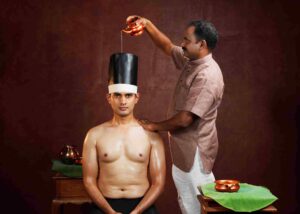
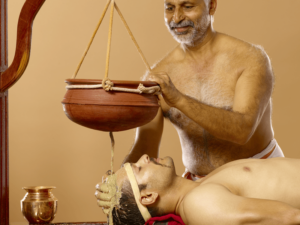
Shirodhara involves a gentle, continuous flow of warm oil or another prescribed liquid over the forehead for a specified period.
Traditional purpose:
- Encouraging relaxation
- Supporting a calming wellness routine
- Providing a quiet, restorative treatment experience
Although Shirodhara is traditionally associated with sleep and relaxation, clinical evidence for treating insomnia remains limited.
2. Ksheeradhara – Traditional Medicated Milk Therapy
What is Ksheeradhara?
Ksheeradhara involves the continuous application of a prepared milk-based liquid over the forehead or body, depending on the prescribed procedure.

Traditional purpose:
- Supporting relaxation
- Providing a soothing treatment experience
- Addressing individual wellness needs within Ayurvedic practice
The practitioner should assess allergies, skin sensitivity, and overall suitability before recommending this therapy.
3. Takradhara – Traditional Buttermilk Flow Therapy
What is Takradhara?
Takradhara uses a continuous flow of specially prepared buttermilk over the forehead.
Traditional purpose:
- Encouraging a calm treatment environment
- Supporting general relaxation
- Providing individualized traditional wellness care
Takradhara should not be presented as a proven treatment for insomnia, anxiety disorders, or high blood pressure.
4. Shiro Pichu – Traditional Head Oil Application
What is Shiro Pichu?
Shiro Pichu involves placing a cotton pad soaked in selected medicated oil over a specific area of the scalp for a prescribed duration.

Traditional purpose:
- Gentle external oil application
- Supporting relaxation
- Providing traditional head-focused Ayurvedic care
The choice of oil and treatment duration depends on the practitioner’s assessment.
5. Shirovasti – Classical Head Oil Retention Therapy
What is Shirovasti?
Shirovasti is a traditional Ayurvedic procedure in which warm medicated oil is retained over the head using a specially designed cap.

Traditional purpose:
- Providing a specialized head-focused therapy
- Supporting relaxation within traditional Ayurvedic care
- Addressing individual wellness requirements
Because this procedure involves retaining warm oil, professional assessment and careful temperature control are important.
6. Abhyanga – Full-Body Ayurvedic Oil Massage
What is Abhyanga?
Abhyanga is a traditional full-body massage performed using selected herbal oils and specific massage techniques.

Traditional purpose:
- Supporting physical relaxation
- Easing general muscle tension
- Encouraging comfort and well-being
People interested in relaxation-focused therapies can also review our Ayurvedic Massage in Dubai.
Not Sure Which Ayurvedic Sleep Therapy Is Right for You?
Speak with our Ayurvedic practitioners in Bur Dubai to explore suitable traditional therapies for relaxation and sleep support.
Ayurvedic Therapies vs Sleeping Medicines: What Should You Know?
People experiencing insomnia sometimes search for natural alternatives to sleeping medicines.
However, Ayurvedic therapies and prescribed sleep medications serve different purposes and should not be considered interchangeable.
Prescription sleep medicines may be appropriate for certain patients under medical supervision. Meanwhile, traditional Ayurvedic therapies are sometimes chosen for relaxation and complementary wellness support.
For persistent insomnia, healthcare professionals may recommend cognitive behavioral therapy for insomnia (CBT-I), which is an established first-line treatment for chronic insomnia.
Important: Never stop or change prescribed sleeping medication without consulting your treating doctor.
Herbal preparations can also cause side effects or interact with medicines. Ask a qualified healthcare professional before taking any Ayurvedic sleep supplement.
What to Expect During Your Sleep Therapy Session at Dhanwanthari Ayurveda Dubai
Understanding the consultation and therapy process can help you prepare for your appointment.
Step 1: Personalized Consultation and Assessment
The Ayurvedic practitioner reviews your sleep concerns, medical history, current medicines, daily routine, and general health.
Traditional Ayurvedic concepts such as Prakriti and dosha assessment may also form part of the consultation.
If symptoms suggest an underlying medical condition, further medical evaluation may be recommended.
Step 2: Preparing for the Therapy
Depending on the recommended procedure, you may be guided to a quiet treatment room and positioned comfortably on a therapy table.
The practitioner should explain the treatment, materials used, expected duration, and relevant precautions.
Step 3: The Traditional Therapy Procedure
The procedure depends on the selected treatment.
For example:
- Shirodhara, Ksheeradhara, or Takradhara: A prepared liquid is applied in a continuous flow over the forehead.
- Shiro Pichu: An oil-soaked pad is placed on the scalp.
- Abhyanga: Selected oils are applied using traditional massage techniques.
Each procedure should be performed with appropriate hygiene and safety measures.
Step 4: Session Duration and Aftercare
Session duration varies according to the procedure and individual treatment plan.
After the session, the practitioner may recommend a short rest period and explain any relevant aftercare instructions.
Step 5: Follow-Up and Treatment Planning
There is no fixed number of sessions suitable for everyone.
The practitioner may recommend follow-up appointments based on individual needs, treatment suitability, and response.
If insomnia continues or affects daily functioning, an appropriate medical evaluation is important.
Simple Ayurvedic Home Tips for Better Sleep Tonight
Alongside professional guidance, simple evening habits can help create a healthier sleep routine.
1. Gentle Warm Foot Massage (Padabhyanga)
A short, gentle foot massage may be a relaxing part of your bedtime routine.
If using oil, choose a product suitable for your skin and avoid applying it to irritated or broken skin.
2. Choose a Calming Evening Drink
Some people enjoy warm milk or caffeine-free herbal tea before bedtime.
Avoid assuming that herbal preparations are always safe. Ingredients such as ashwagandha can interact with medicines and may be unsuitable for certain health conditions.
3. Practice Slow Breathing
Spend five minutes practising gentle breathing exercises or quiet relaxation before bed.
Slow breathing may help reduce feelings of tension and prepare you for rest.
4. Reduce Screen Exposure Before Bed
Try to avoid bright screens for 30–60 minutes before bedtime.
Dim lighting and a consistent wind-down routine may help support your natural sleep-wake cycle.
5. Maintain a Consistent Sleep Schedule
Go to bed and wake up at approximately the same time each day.
Also consider limiting caffeine late in the day, keeping the bedroom comfortable, and avoiding heavy meals close to bedtime.
When Should You Seek Medical Help for Sleep Problems?
Occasional sleeplessness is common, but persistent sleep difficulties deserve attention.
Consider consulting a healthcare professional if:
- Sleep problems occur frequently or continue for several weeks.
- Daytime fatigue affects your work or daily activities.
- You experience loud snoring, breathing pauses, or gasping during sleep.
- Sleep problems occur alongside significant anxiety, depression, or other health concerns.
- You depend regularly on sleeping medication to fall asleep.
These symptoms may require assessment for insomnia, sleep apnea, or another underlying condition.
Expert Perspective: Individualized Ayurvedic Care
At Dhanwanthari Ayurvedic Medical Center LLC, traditional Ayurvedic therapies are considered according to individual health needs and practitioner assessment.
Before recommending a relaxation-focused therapy, a qualified practitioner should review the patient’s medical history, current medications, treatment goals, and potential risks.
FAQs About Ayurvedic Sleep Treatments
1. How many Shirodhara sessions are needed for sleep concerns?
There is no established number of Shirodhara sessions proven to treat insomnia. The practitioner may recommend a personalized schedule for traditional relaxation care after assessing individual suitability.
2. Are the oils used in Ayurvedic sleep therapies natural?
Ayurvedic therapies may use traditional herbal oils and other prepared ingredients. However, natural products can still cause allergic reactions or other adverse effects. Patients should ask about the ingredients and product safety.
3. Can Ayurvedic sleep therapies be combined with other treatments?
Some traditional therapies may be combined as part of an individualized care plan. However, suitability depends on the person’s medical history, medications, and overall health. Professional assessment is important.
4. Are there side effects to Ayurvedic head therapies?
Yes, potential risks include skin irritation, allergic reactions, discomfort, and temperature-related injury. Appropriate practitioner supervision and safety precautions are important.
5. Can Ayurveda cure chronic insomnia?
There is insufficient high-quality evidence to conclude that Ayurvedic therapies cure chronic insomnia. They may be explored as complementary relaxation practices, but persistent insomnia should receive appropriate medical evaluation and evidence-based treatment.
Reclaim Restful Sleep with Personalized Ayurvedic Care in Dubai
Sleep plays an important role in physical health, mental well-being, and everyday functioning.
If you are exploring Ayurvedic treatment for sleep in Dubai, Dhanwanthari Ayurveda offers traditional Kerala therapies and individualized consultations to help you understand available relaxation-focused care options.
Ready to Take the Next Step Towards Better Sleep?
Consult our Ayurvedic practitioners at Dhanwanthari Ayurveda, Bur Dubai, to explore personalized relaxation and sleep support options.
Medical disclaimer: This article is for general educational purposes only. Ayurvedic therapies should not replace necessary medical diagnosis or evidence-based treatment for insomnia or other health conditions.