



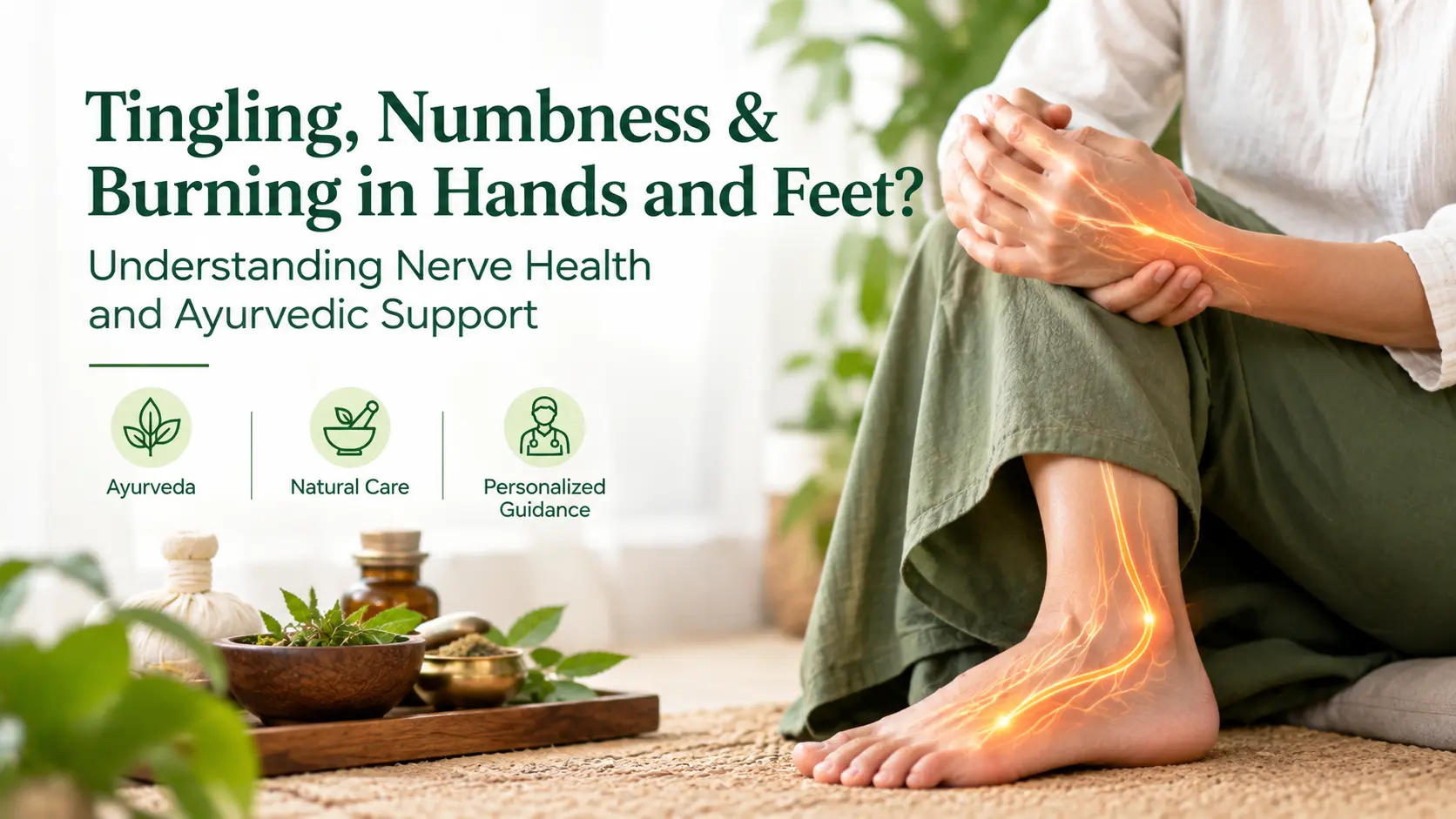
Tingling in your fingers. Burning in your feet. Numbness that seems to appear without warning. Or weakness that makes everyday movements more difficult.
These symptoms can be easy to ignore, especially when they begin gradually. But changes in sensation or strength in the hands and feet can sometimes be linked to nerve-related conditions and deserve proper attention.
In this article, we look at common reasons for these symptoms, what nerve health means, when professional assessment is important, and how Ayurveda may provide personalized supportive care.
🎥 Watch the Dhanwanthari Ayurveda Video: Understanding Nerve Health
In this video, Dhanwanthari Ayurveda introduces Srothotharangini, an Ayurvedic approach presented as supporting nerve health, circulation and overall wellbeing through personalized care.
Experiencing tingling, numbness, burning sensations or weakness in your hands or feet?
The video highlights an important message: recurring or persistent changes in sensation should not simply be dismissed as tiredness or temporary discomfort.
What Can Tingling, Numbness or Burning Mean?
Tingling, numbness, burning sensations and weakness can occur when nerves are not functioning normally.
Peripheral nerves carry signals between the brain and spinal cord and the rest of the body. They help the body sense touch, temperature and pain and also control movement and certain automatic functions.
Peripheral neuropathy is one condition that can cause these symptoms. According to the Mayo Clinic, common symptoms can include numbness, prickling, tingling, burning or stabbing pain and muscle weakness, particularly in the hands and feet.
However, these symptoms alone do not establish a diagnosis.
The underlying cause needs to be assessed by an appropriate healthcare professional.
Common Symptoms of Nerve Problems
Nerve-related symptoms can vary depending on which nerves are affected.
You may notice:
- Tingling or pins-and-needles sensations
- Numbness in the hands or feet
- Burning or stabbing pain
- Increased sensitivity to touch
- Muscle weakness
- Difficulty with balance or coordination
- Reduced sensation of temperature or pain
- A feeling of wearing gloves or socks when you are not
Some people experience symptoms gradually, while others may notice them more suddenly.
The National Institute of Neurological Disorders and Stroke notes that peripheral neuropathy can affect sensory, motor or autonomic nerves, so symptoms can differ considerably from one person to another.
What Causes Nerve Symptoms?
There is no single cause of tingling or numbness.
Possible causes include:
Diabetes
Diabetes is one of the most common causes of peripheral neuropathy. Persistently high blood glucose can damage nerves and the small blood vessels that supply them.
Vitamin Deficiencies
Certain vitamin deficiencies, particularly vitamin B12 deficiency, can contribute to nerve problems.
Nerve Compression or Injury
An injury or prolonged pressure on a nerve can result in numbness, tingling or weakness.
Certain Medications
Some medications, including certain chemotherapy drugs, can affect peripheral nerves.
Autoimmune or Metabolic Conditions
Autoimmune disorders, kidney or liver disease, thyroid disorders and other metabolic conditions can sometimes be associated with neuropathy.
Infections and Other Conditions
Certain infections, inherited conditions and exposure to toxins can also affect the peripheral nervous system.
Because the causes are varied, it is important not to assume that every case of burning feet or numb hands is neuropathy.
Is Tingling in Your Feet Always Neuropathy?
Not necessarily.
Temporary tingling can occur when you sit or sleep in a position that places pressure on a nerve. It may disappear once the pressure is relieved.
Persistent, recurring or progressively worsening symptoms are different.
If tingling, numbness, burning or weakness continues, affects both sides of the body, interferes with sleep or daily activities, or becomes progressively worse, professional assessment is advisable.
The Mayo Clinic recommends seeking medical care for unusual tingling, weakness or pain in the hands or feet because early assessment can help identify the cause and reduce the risk of further nerve damage.
Why Diabetes and Nerve Health Are Closely Connected
For people with diabetes, nerve health deserves particular attention.
Diabetic peripheral neuropathy often begins in the feet and can cause:
- Burning sensations
- Tingling
- Numbness
- Increased sensitivity
- Weakness
- Reduced ability to feel pain or temperature
The CDC advises people with diabetes to discuss burning, tingling, weakness or pain in the hands or feet with their doctor, particularly when symptoms affect sleep or daily activities.
Reduced sensation can also make it easier to overlook cuts, blisters or foot injuries. Regular foot care and appropriate medical follow-up are therefore important for people with diabetes.
How Ayurveda Looks at Nerve Health
Ayurveda traditionally considers nerve-related complaints within a broader assessment of the body rather than focusing only on one symptom.
An Ayurvedic practitioner may consider:
- Individual constitution or Prakriti
- Dosha balance
- Lifestyle and daily routine
- Diet and digestion
- Sleep
- Stress
- Physical activity
- The nature and duration of symptoms
- Existing health conditions
- Previous treatments
Traditional Ayurvedic understanding often considers Vata to have an important relationship with movement and neurological functions.
However, an Ayurvedic interpretation should not be used as a substitute for identifying the medical cause of neurological symptoms.
The first priority is understanding what may be contributing to the symptoms.
What Is Srothotharangini?
Srothotharangini is the Ayurvedic approach highlighted in Dhanwanthari Ayurveda’s video.
The concept is presented around supporting nerve health, circulation and overall wellbeing through personalized Ayurvedic care.
Rather than suggesting one therapy for everyone, the Ayurvedic approach can consider the person’s symptoms, constitution, lifestyle and overall health before developing an appropriate plan.
This is particularly important when symptoms such as numbness or weakness may have different underlying causes.
How Personalised Ayurvedic Care May Support Nerve Health
Ayurvedic care may involve a combination of traditional therapies, lifestyle guidance, dietary recommendations and practitioner-selected Ayurvedic medicines.
Depending on the individual’s assessment, therapies may be considered to support:
- Relaxation and comfort
- Muscle and tissue nourishment
- Mobility
- General wellbeing
- Circulatory support
- A balanced daily routine
At Dhanwanthari Ayurveda, traditional therapies such as Mamsa Kizhi and Njavara Kizhi are described as being customized according to the individual’s health condition and Ayurvedic assessment. Mamsa Kizhi is listed by the clinic for selected nerve-related and muscular conditions, while Njavara Kizhi is described as a nourishing therapy used for selected neurological and musculoskeletal concerns.
These therapies should not be selected independently based on symptoms alone. A qualified practitioner should determine whether a particular therapy is appropriate.
The Role of Lifestyle in Nerve Health
Treatment is only one part of supporting overall nerve health.
Depending on your health condition, a healthcare professional may recommend paying attention to:
Balanced Nutrition
Adequate nutrition is important for maintaining normal nerve function. If a vitamin deficiency is suspected, appropriate testing and professional advice may be necessary.
Blood Sugar Management
For people with diabetes, keeping blood glucose within the target range recommended by their healthcare team is an important part of reducing the risk of nerve complications.
Regular Movement
Appropriate physical activity can support mobility, strength and general health. Exercise should be adapted to your individual condition.
Sleep
Poor sleep can make pain and discomfort more difficult to manage. Maintaining a consistent sleep routine may support overall wellbeing.
Stress Management
Chronic stress can affect sleep, activity levels and general wellbeing. Relaxation practices, breathing exercises or other appropriate approaches may be useful as part of a broader wellness routine.
When Should You See a Doctor?
Do not ignore persistent changes in sensation.
Professional assessment is particularly important if you experience:
- Persistent numbness
- Repeated burning or tingling
- Progressive weakness
- Difficulty walking or maintaining balance
- Symptoms that interfere with sleep
- Loss of sensation in your feet
- New symptoms after an injury
- Symptoms associated with diabetes
- Unexplained changes in bladder, bowel or other autonomic functions
The cause may be treatable, and identifying it early can help guide appropriate care.
Why Diagnosis Matters Before Choosing Treatment
A person experiencing burning feet may have diabetic neuropathy.
Another person may have a vitamin deficiency.
Someone else may have nerve compression, a medication-related problem, an autoimmune condition or another cause.
The symptoms can look similar while the underlying problems are different.
This is why responsible Ayurvedic care should begin with an individualized consultation rather than simply choosing a therapy because it is advertised for “nerve problems.”
Ayurveda can be explored as a complementary approach where appropriate, but it should not delay necessary medical diagnosis or treatment.
Expert Perspective: Dr Jaisam
Dr. Jaisam, Consulting Physician at Dhanwanthari Ayurveda, discusses nerve-related symptoms such as tingling, numbness, burning sensations and weakness in the hands and feet in the accompanying video.
His approach emphasizes understanding the individual’s symptoms and overall health before considering an appropriate Ayurvedic care plan. Rather than treating every case of nerve discomfort in the same way, a personalized assessment can help determine which traditional approaches may be suitable.
If symptoms are persistent, worsening or associated with significant weakness or loss of sensation, appropriate medical evaluation should also be considered.
Ayurvedic Nerve Support in Dubai
If you are searching for Ayurvedic Treatment in Dubai, it is important to choose care based on professional assessment rather than simply selecting a treatment from a list.
At Dhanwanthari Ayurvedic Medical Center in Bur Dubai, consultations are designed around understanding the individual’s health condition, lifestyle and Ayurvedic requirements.
The clinic provides traditional Kerala Ayurveda and personalized care under qualified Ayurvedic practitioners.
For people looking for the best Ayurvedic Clinic in Dubai, Dhanwanthari Ayurveda is located at:
Suite #210, 2nd Floor, Al Ain Shopping Centre, Computer Plaza, Near Sharaf DG Metro Station, Exit 1, Bur Dubai, UAE.
WhatsApp: +971 50 779 6303
Tel: +971 4 220 8421
A Note for People Experiencing Burning or Numb Feet
If you have reduced sensation in your feet, take extra care to protect them from injury.
You may not always notice a cut, blister or burn when sensation is reduced. This is particularly important for people with diabetes.
Check your feet regularly and seek appropriate medical advice if you notice wounds, infections, swelling, color changes or other unusual changes.
Nerve health is not only about reducing discomfort. Maintaining sensation, strength, mobility and safety is equally important.
FAQs
What causes tingling, numbness or burning in the hands and feet?
These symptoms can have many causes, including peripheral neuropathy, diabetes, vitamin deficiencies, nerve compression, certain medications, infections, autoimmune conditions and other health problems. Persistent symptoms should be professionally evaluated.
Is burning in the feet always a sign of neuropathy?
No. Burning sensations can have several possible causes. Peripheral neuropathy is one possibility, but a healthcare professional should assess persistent or recurring symptoms to determine the underlying cause.
Can Ayurveda help with nerve-related symptoms?
Ayurvedic care may provide personalized supportive approaches involving traditional therapies, lifestyle guidance, dietary recommendations and practitioner-selected medicines. It should be individualized and should not replace necessary medical diagnosis or treatment.
Can diabetes cause numbness and burning in the feet?
Yes. Diabetes can cause peripheral nerve damage, commonly affecting the feet and legs. Symptoms may include tingling, burning, numbness, pain and weakness. Good diabetes management and regular medical follow-up are important.
When should I see a doctor for tingling or numbness?
Seek professional assessment when symptoms are persistent, worsening, associated with weakness or balance problems, interfering with sleep or daily activities, or occurring in the context of diabetes or another health condition.
Conclusion
Tingling, numbness, burning sensations and weakness in the hands or feet should not always be dismissed as temporary discomfort.
These symptoms can have different causes, from diabetes and vitamin deficiencies to nerve compression, medication effects and other medical conditions. Understanding the cause is an important part of choosing appropriate care.
Ayurveda takes an individualized approach that considers the person’s constitution, lifestyle, diet and overall health. The Srothotharangini approach highlighted by Dhanwanthari Ayurveda focuses on supporting nerve health, circulation and wellbeing through personalized Ayurvedic care.
If you are experiencing persistent nerve-related symptoms and are considering Ayurvedic Treatment in Dubai, begin with a professional consultation rather than self-selecting a therapy.
Medical Review
Medically Reviewed By: Dr Sathya K. Pillai
Designation: Medical Director & Chief Physician, Dhanwanthari Ayurveda
Clinical Experience: 35+ years in Ayurvedic science and holistic healthcare
Last Updated: September 2026
Medical Disclaimer
This article is for general educational purposes and does not provide a diagnosis or replace professional medical care. Persistent numbness, burning, weakness or other neurological symptoms should be evaluated by an appropriate healthcare professional. Ayurvedic therapies should be recommended and administered by qualified practitioners after individual assessment.